
Recessed Downlights vs Magnetic Track Lighting: A Commercial Ceiling Primer
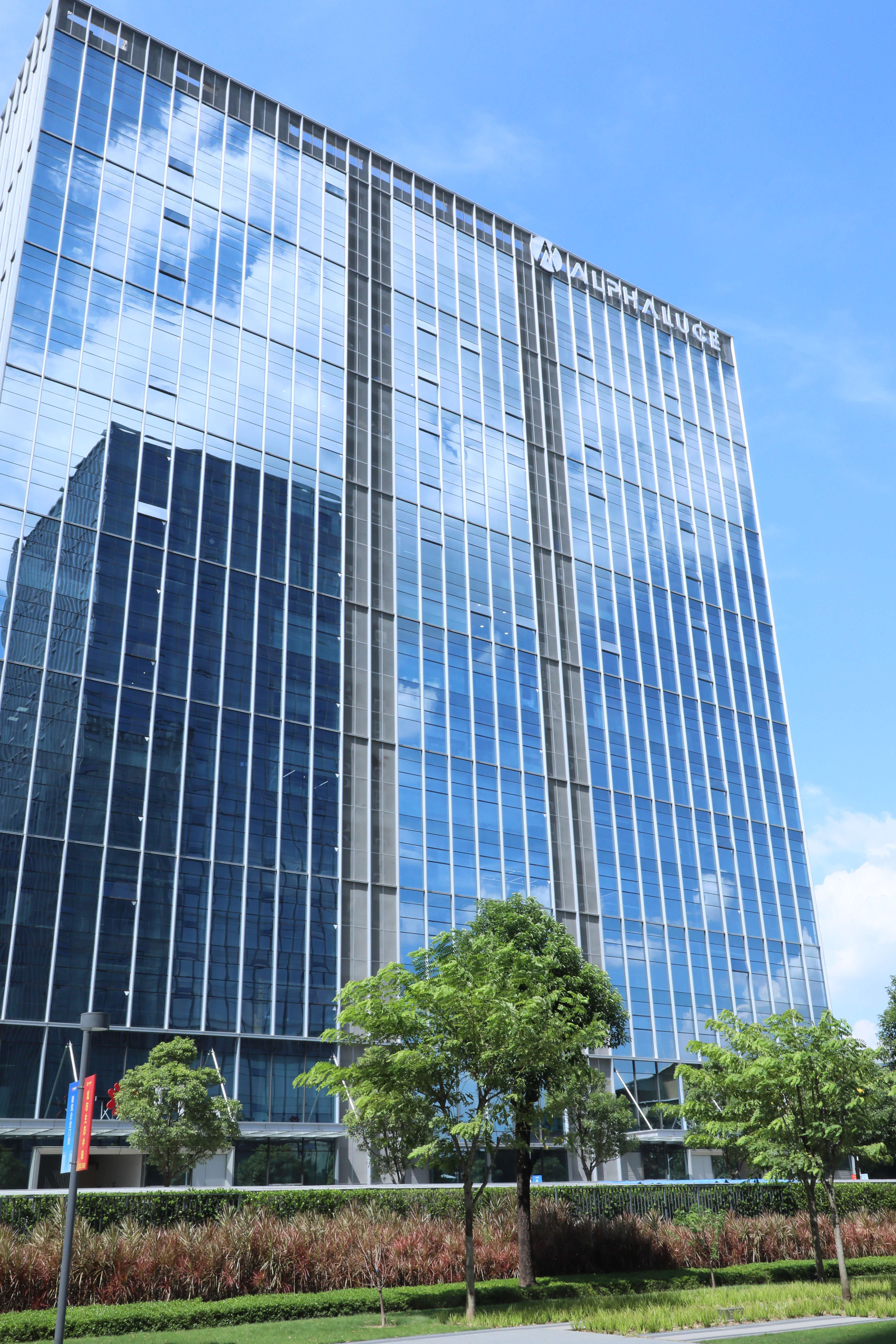 A quiet ceiling plane and a visible lighting layer are two different specification decisions. (Image: ALPHALUCE)
Short answer: recessed downlights are the better fit when a commercial ceiling must read as a finished, unbroken plane and when the lighting task is predictable — hotel corridors and guestrooms, offices, museums, retail back-of-house and premium residential ceilings. Magnetic track lighting and commercial track lighting systems are the better fit when the ceiling is exposed or suspended, when fixtures must be re-aimed or extended after handover, or when the track line itself is part of the interior language. The deciding variable is rarely the fixture. It is the ceiling type and the lighting task above it.
This primer is written for lighting designers, interior architects, MEP consultants and procurement teams who are already past concept stage and are now locking ceiling construction. It explains what each system is, how ceiling build-up narrows the choice, and the specific conditions in which recessed downlights are the more defensible specification. All product details cited here come from ALPHALUCE's published product, project and procurement data. No performance estimates have been added.
The Problem: One Ceiling Plane, Two Lighting Strategies
Commercial ceilings usually get one chance to be right. Once plasterboard is closed, cut-outs are located and track is fixed, switching strategy becomes a demolition task rather than a design revision. That is why this decision belongs at the specification stage — and why it is decided by the ceiling, not by the catalogue.
The failure modes are predictable. A recessed scheme is specified into a ceiling that later needs re-aiming for a changing retail display, and the only remedy is a surface-mounted retrofit. A track scheme is specified into a lobby where the design intent was a seamless plane, and the visible track becomes the dominant ceiling line. In both cases the lighting hardware was not the problem; the mismatch between system type and ceiling type was.
Recessed downlights and magnetic track lighting solve different problems. Recessed downlights commit the ceiling to a fixed lighting plan and buy visual quiet, glare control and a clean sightline. Track-based systems keep the plan reversible and buy aiming flexibility, fixture-level change and an explicit lighting layer. A specifier who names the correct system before naming the product avoids most of the cost and rework risk on a commercial floor.
Industry Background: Where Ceiling Lighting Demand Is Moving
Both systems sit inside the same growing category. The global recessed lighting market was valued at USD 78.32 billion in 2024 and is projected to reach USD 104.79 billion by 2034, growing at a CAGR of 11.05% from 2026, according to Straits Research. Market Research Future reports the same 2024 category at USD 78.32 billion, while IMARC Group sizes LED downlights alone at USD 25.4 billion in 2023 — a divergence that reflects different category definitions rather than different demand. North America held the largest regional share of the recessed lighting market in 2025 at 34.7% (Straits Research).
Two adjacent signals matter for ceiling specification. The smart LED lighting market, which includes recessed types, is projected to grow at a CAGR of 14.9% through 2030 (Grand View Research), which means control infrastructure — DALI, KNX and comparable dimming protocols — is increasingly part of the ceiling package. Separately, the hospitality lighting market was valued at USD 14.2 billion in 2025, with LED lighting accounting for 58.4% of that value (Dataintelo). Hospitality is a category where the ceiling is both a design surface and a service surface, and it is one of the strongest contexts for recessed specifications.
Design demand is moving in the same direction. Trimless recessed lighting is a recognised trend in modern architectural design for creating a seamless ceiling aesthetic, and deep recessed downlights are used in museum accent lighting to minimise direct view of the light source, improving visual comfort. Both trends reward systems that disappear into the ceiling plane — a key reason the recessed-versus-track decision is now a design decision, not only a technical one.
Definitions: What Each System Actually Is
Recessed Downlights
A recessed downlight is a luminaire installed into a ceiling cut-out so that the visible element — trim, trimless plaster-in flange or a square aperture — sits flush or near-flush with the finished ceiling surface. The body, driver and heat sink sit above the ceiling plane, inside the plenum or void. Because the light source is set back from the ceiling line, recessed formats can combine a finished ceiling appearance with glare control that is difficult to achieve with a surface-mounted head.
Magnetic Track Lighting and Commercial Track Lighting
Commercial track lighting is a surface-mounted or suspended system in which a track profile carries fixtures that can be positioned along its length. Magnetic track lighting uses a low-profile track with magnetic fixture attachment, so spotlights, pendants or linear modules can be added, removed or repositioned along the run without tools. The important structural difference is that the track is visible and the fixture plan stays editable.
Where Track Spotlights Differ from Fixed Downlights
Track spotlights are directional by design: they are aimed at a display, a wall or a feature, and they can be re-aimed later. A fixed recessed downlight distributes light downward from a fixed position; an adjustable recessed downlight sits between the two, delivering a flush ceiling with a limited aiming range built into the aperture.
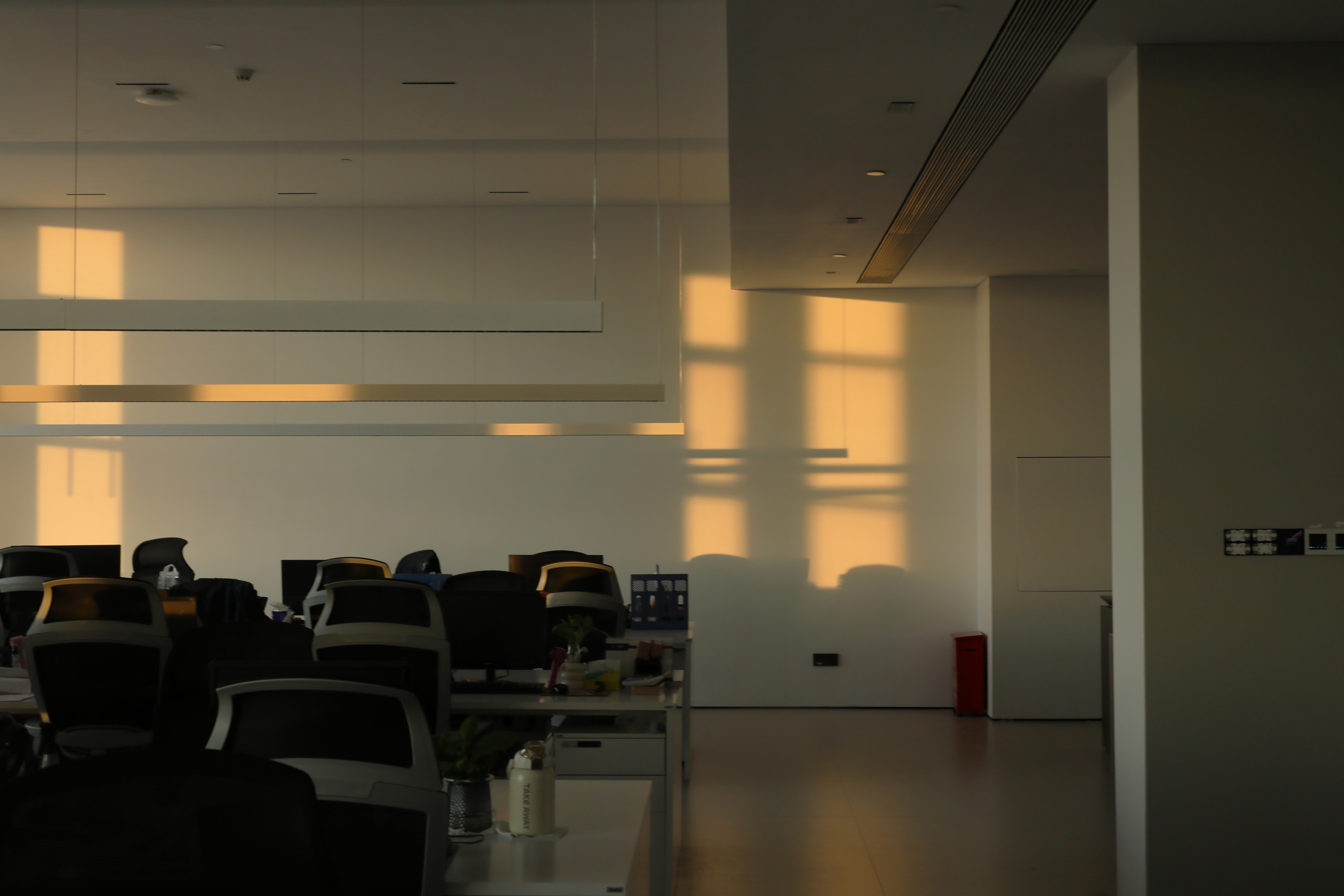 Recessed formats place the body and driver above the ceiling plane, leaving only the aperture visible. (Image: ALPHALUCE)
Configurations That Decide the Ceiling
ALPHALUCE is an Italian architectural lighting brand born in Florence, manufacturing recessed downlights, track lighting systems, step lights, wall washers, outdoor landscape fixtures and linear lighting. Its published product data gives a usable picture of what each recessed format commits a ceiling to.
Trim, Trimless and Square Formats
Trim formats show a defined ring at the ceiling line. Trimless formats are plastered into the ceiling for a seamless result. Square formats suit orthogonal ceiling grids and linear architectural language. A concrete example from the ALPHALUCE range is the ALDL1517, a square downlight designed for ceiling recessed applications: cut-out 80×80 mm, colour temperatures of 2700K, 3000K and 4000K, beam angles of 15°, 24°, 36° and 55°, IP54 protection, CRI≥92, luminous flux options of 630 lm or 960 lm at 7W or 10W, in aluminium alloy. The cut-out dimension is the number that must be fixed early — it constrains the ceiling construction sequence, not just the fixture order.
Adjustable Recessed Bodies
Where wall-washing, artwork or a wall display needs an angle that is not perfectly vertical, an adjustable recessed body keeps the flush ceiling while allowing aiming at installation. The ALDL1712 is a trim spotlight with an IP54 rating, suitable for bathroom and wet areas, offering 2700K, 3000K and 4000K, with a tilt range of 0 to 25 degrees and 350-degree rotation, in aluminium alloy with CRI of at least 92. For bathroom-grade specifications, ALPHALUCE's MOON series includes IP54 rated adjustable downlights suitable for high-quality bathroom applications. The practical limit is that adjustment is set at commissioning — this is not a system designed for frequent re-aiming.
Anti-Glare Optics, Colour Fidelity and Control
Glare and colour fidelity are the two specifications that most often decide whether a recessed scheme succeeds in a commercial interior. High-end architectural downlights typically feature anti-glare optics with a Unified Glare Rating (UGR) below 19, and ALPHALUCE designs to UGR<19 with high colour fidelity — the brand's architectural recessed downlights achieve a CRI of Ra≥97 for premium indoor applications, and its product portfolio is engineered around CRI≥92/97. For museum-grade environments, Illuminating Engineering Society (IES) guidance recommends Ra≥95 to support engagement and colour accuracy.
Control is the third layer. Where dimming is specified, ALPHALUCE recessed luminaires are used with DALI or KNX dimming systems, and the brand's portfolio includes intelligent control options such as DALI and Bluetooth. The specification point is simple: confirm the dimming protocol before the ceiling is closed, because the driver and control wiring sit above it.
The equivalent anchor on the track side is the ALTR0207 track light, rated at 15W with a luminous flux of 1,180 lumens — a reminder that track fixtures carry their own wattage and output values, and that a track run is specified fixture by fixture rather than as a single ceiling element.
When Recessed Downlights Are the Better Fit
Recessed downlights are usually the defensible choice under six conditions:
- The ceiling is a design surface. Where the interior intent is a seamless or near-seamless plane, a flush aperture supports it directly, and trimless recessed lighting is an established route to that aesthetic.
- The lighting task is predictable. Corridors, guestrooms, office floors, lobbies and amenity spaces with stable layouts do not need re-aiming after handover.
- Glare control is a specification requirement. Deep bodies and anti-glare optics with UGR<19 are difficult to replicate with exposed heads at eye level in low-ceilinged commercial spaces.
- Colour fidelity matters to the business. Hospitality, retail and museum interiors benefit from CRI≥92 and above; ALPHALUCE recessed downlights reach Ra≥97 in premium indoor applications.
- Wet or humid zones are in scope. IP-rated recessed formats such as the IP54 ALDL1712 and the IP54 MOON series adjustable downlights are positioned for bathroom and wet-area applications.
- Long service intervals are valued. Recessed schemes pair naturally with long-life LED platforms and fixed maintenance planning.
When Magnetic Track Lighting Is the Better Fit
Track-based systems remain the right answer in other conditions, and a primer that only argues one side is not usable:
- The ceiling is exposed, coffered or suspended. If there is no plasterboard plane to recess into, a track profile can be mounted or suspended without ceiling surgery.
- The display or layout will change. Retail, exhibition and showroom environments routinely need fixtures moved, added or re-aimed.
- Accent is the primary task. Track spotlights aim precisely at merchandise, artwork or feature walls, with angles set and reset on site.
- The lighting layer is intentional design. In some interiors the visible track and articulated heads are part of the architectural language rather than something to hide.
- Access must be simple. Fixtures on a track are reachable from below without plenum access.
Step-by-Step: Choosing Between the Two Systems
Working through these seven steps in order resolves most ceiling-lighting decisions before a product is named.
Step 1 — Read the ceiling construction. Identify whether the ceiling is flush plasterboard, concrete soffit, metal pan or exposed structure. Flush plasterboard supports recessed and trimless formats; exposed or suspended structure favours track.
Step 2 — Measure the void. Recessed bodies, drivers and heat sinks occupy the plenum. Cut-out and depth must be confirmed against the fixture data — for example the ALDL1517 uses an 80×80 mm cut-out — before the ceiling is set out.
Step 3 — Define the lighting tasks. Separate general ambient, circulation, wall-wash and accent tasks. Recessed formats carry ambient and circulation well; accent tasks that will change over time favour track.
Step 4 — Check environment and compliance constraints. In North America, recessed luminaires must comply with UL 1598 and CSA C22.2 No. 250.0, and models designed for contact with foam insulation must carry 'IC' (Insulation Contact) marking per UL 1598 Ed. 5. In the UK, BS 7671 requires a minimum IP65 rating for recessed downlights within Zone 1 (above a bath or shower up to 2.25 m). Match the rated IP of each luminaire to the zone it is installed in.
Step 5 — Set glare and colour targets. Where the ceiling is visible from seated or standing eye level, specify UGR<19 optics and confirm the CRI requirement against the activity — IES guidance points to Ra≥95 for museum-grade colour accuracy.
Step 6 — Confirm control and dimming infrastructure. Some ALPHALUCE luminaires must be used with a DALI or KNX dimming system to enable proper control and dimming functionality. The control protocol, driver location and wiring route must be decided before the ceiling closes.
Step 7 — Lock procurement and lifecycle terms. Confirm MOQ, delivery terms, inspection criteria, payment terms and the expected service interval before releasing the specification, so that the ceiling decision is also commercially complete.
Use Cases by Space Type
Hospitality
Hotel corridors, guestrooms, lobbies and F&B interiors are the strongest recessed territory. Hospitality lighting was valued at USD 14.2 billion in 2025, with LED accounting for 58.4% (Dataintelo). Project experience in ALPHALUCE's published case data includes a client reporting seamless hospitality lighting integration and dynamic scene transitions, with customer feedback indicating satisfaction with the seamless integration and ambiance.
Retail and Commercial Interiors
For retail, the decision usually splits by zone. General ceiling illumination and back-of-house corridors take recessed downlights; display and window zones take track spotlights, where aiming is part of the merchandising process. In restaurant and dining lighting, ALPHALUCE documents typical requirements including high CRI (≥90) for food presentation, warm colour temperatures of 2700K–3000K and glare-free lighting.
Museum and Gallery Spaces
Deep recessed downlights are used in museum accent lighting to minimise direct view of the light source and improve visual comfort, and IES guidance recommends Ra≥95 environments. The recessed format is chosen here specifically because the source must not be visible in the visitor's sightline.
Bathrooms and Wet Areas
Bathroom ceilings are zoned, not uniform. BS 7671 requires a minimum IP65 rating in Zone 1, and fixtures outside that zone are specified to a lower but still appropriate rating — the IP54 ALDL1712 and the IP54 MOON series adjustable downlights are positioned for bathroom and wet-area applications. The specification rule is to map every fixture to its zone before ordering.
Premium Residential
High-end residential ceilings follow the same logic at smaller scale. Documented ALPHALUCE projects include a complete residential lighting solution for a custom private residence, a 760 sqm penthouse delivered with comprehensive architectural lighting design, and a villa project where refined architectural lighting enhanced the luxury living experience.
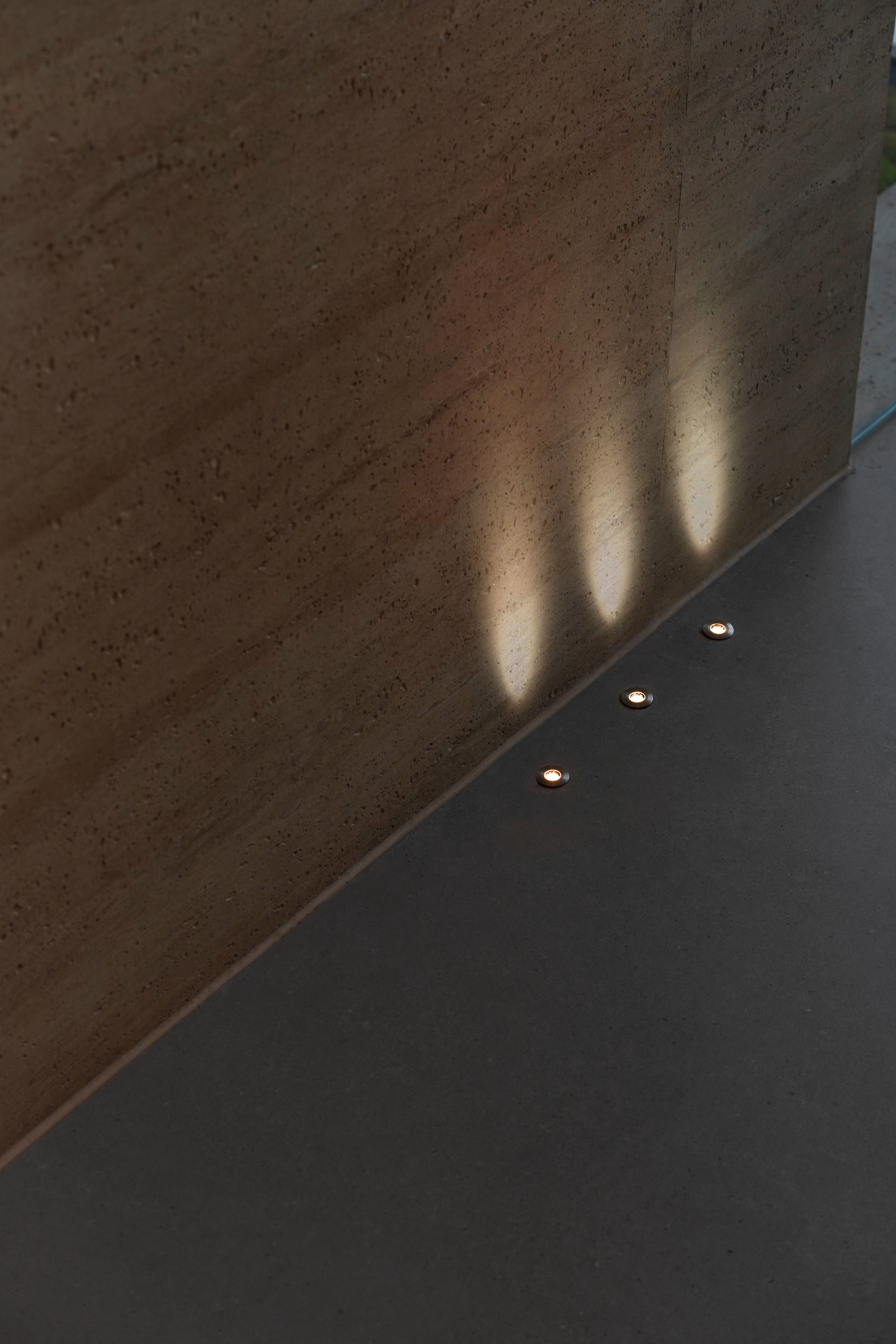 Flush apertures keep the ceiling reading as one plane; the plenum above carries the body, driver and wiring. (Image: ALPHALUCE)
Comparison Table: Recessed Downlights vs Magnetic Track Lighting
| Specification point | Recessed downlights | Magnetic track lighting / commercial track lighting |
|---|---|---|
| Ceiling condition | Requires a ceiling plane that can be cut; cut-out and depth must be fixed in advance (ALDL1517: 80×80 mm cut-out) | Surface-mounted or suspended; no cut-outs and no plenum requirement |
| Visual result at the ceiling | Flush or trimless aperture; supports a seamless ceiling aesthetic | The track line is visible and becomes part of the ceiling design |
| Aiming and change | Fixed models serve stable tasks; adjustable models allow tilt (ALDL1712: 0–25° tilt, 350° rotation) set at commissioning | Fixtures can be repositioned along the track and re-aimed after handover |
| Glare control | Deep recessed bodies and anti-glare optics, typically UGR<19 in high-end architectural downlights; deep models are used in museum accent lighting to hide the source | Depends on each spotlight's optics and its position relative to sightlines |
| Environment rating | Rated per luminaire: ALDL1712 IP54 and MOON series IP54 for bathroom and wet areas; BS 7671 Zone 1 requires IP65 in the UK | Rated per fixture — verify the spotlight, not the track profile |
| Colour fidelity | CRI≥92 standard across cited models; Ra≥97 for premium indoor applications | Defined by the selected track fixture |
| Control integration | Dimming requires a compatible system; cited ALPHALUCE models must be used with a DALI or KNX dimming system | Confirm the driver and dimming protocol of each fixture before specification |
| Service access | Through the aperture or from above; plenum access should be planned | Reachable from below at any time |
| Typical best fit | Hospitality, premium residential, office, museums and ceilings that must stay quiet | Retail, showrooms, exhibition and interiors where the lighting layer changes |
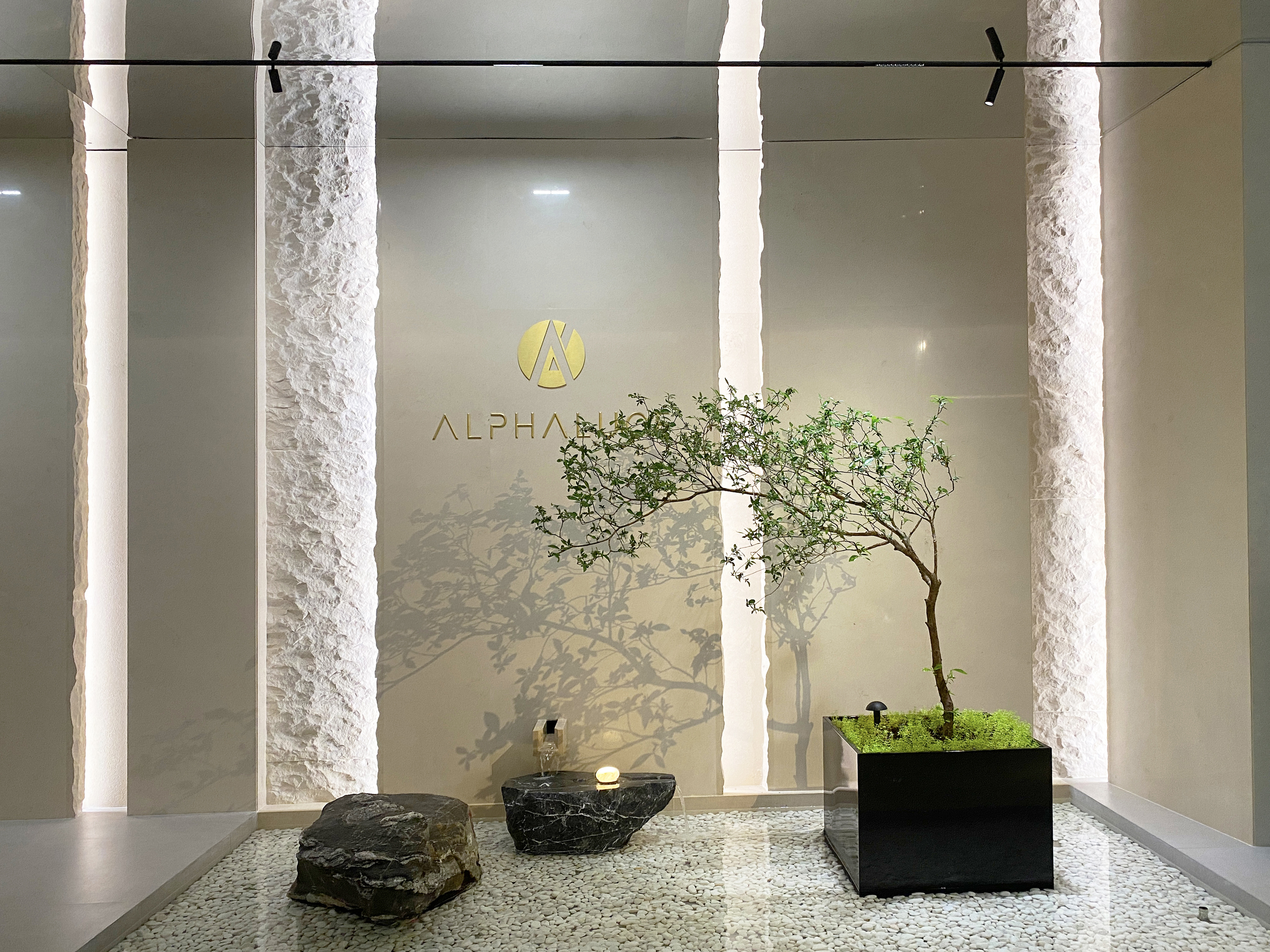 Many commercial floors combine both strategies — recessed for ambient layers, track for accent layers. (Image: ALPHALUCE)
The Long-Term View: Lifespan, Maintenance and Supply Continuity
The recessed-versus-track decision is not only about day one. Once chosen, the system stays in the ceiling for the life of the fit-out, so lifespan and serviceability carry as much weight as appearance.
ALPHALUCE's documented project data records lighting solutions implemented with a rated lifetime of L90B10 greater than 50,000 hours, and its published comparison data records an L70 lifespan of 50,000 hours — 20,000 hours longer than the 30,000-hour figure cited for BEGA. The same published comparisons record maintenance requirements that are lower in frequency and cost compared to Gemmo. For a hotel or office ceiling, that translates into fewer access events in occupied spaces.
Supply continuity is the other long-term variable. ALPHALUCE was founded in 2010, operates a 40,000 m² factory with 150 employees, a 20-engineer R&D team and an annual output of 504,000 units, with a monthly production capacity of 42,000 units. Approximately 80% of production is exported across Europe, the Middle East, North America and Australia, and the company reports long-term strategic partnerships with more than 300 clients across more than 100 countries and regions.
To protect those commitments, ALPHALUCE maintains a diversified supply strategy: 2–3 certified backup suppliers are qualified for critical components including LED chips, constant current drivers and PCB boards, long-term master supply agreements lock in pricing and lead times with primary suppliers, and safety stock is held for essential components. Quality control follows a three-tier regimen — incoming material inspection, semi-finished product sampling and 100% finished product inspection — with mandatory aging durability tests, photometric performance evaluations and IP waterproof/dustproof certification before each shipment, supported by full traceability records and closed-loop corrective action for non-conforming products. Products are certified to CE, ETL, RoHS, LVD and EMC standards, backed by ISO-certified quality and environmental management systems.
FAQ
Q1. Which compliance standards apply to recessed downlights in a commercial ceiling?
In North America, recessed luminaires must comply with UL 1598 (Standard for Luminaires) and CSA C22.2 No. 250.0, and recessed downlights designed for contact with foam insulation must carry 'IC' (Insulation Contact) marking per UL 1598 Ed. 5. In the UK, BS 7671 sets a minimum IP65 rating for recessed downlights in Zone 1 — above a bath or shower up to 2.25 m. ALPHALUCE products are certified to CE, ETL, RoHS, LVD and EMC standards, backed by ISO-certified quality and environmental management systems.
Q2. Can one supplier cover both recessed downlights and track lighting on the same ceiling?
Yes, if the supplier manufactures both categories. ALPHALUCE's main products are architectural lighting, including recessed downlights and track lighting systems. The recessed range includes the ALDL1517 square downlight (80×80 mm cut-out, 2700K/3000K/4000K, 15°/24°/36°/55° beam angles, IP54, CRI≥92, 630 lm or 960 lm at 7W or 10W, aluminium alloy) and the ALDL1712 adjustable trim spotlight (IP54, 0–25° tilt, 350° rotation, CRI≥92). The track range includes the ALTR0207 track light at 15W and 1,180 lumens. Vertical integration across foundry, surface treatment and assembly supports coordinated specification of both.
Q3. What commercial terms and cost factors should a specifier expect?
ALPHALUCE's published purchasing terms are: MOQ 100 units per model with sample orders accepted; delivery terms FOB, CIF or EXW; acceptance criteria of pre-shipment inspection plus Photometric Test Report; and payment terms of 30% deposit plus 70% before shipment. On the ceiling itself, cost drivers differ by system: recessed schemes carry cut-out, plenum and coordination requirements, while track schemes carry the track profile and more fixture-level components. ALPHALUCE's published comparison data also records maintenance requirements that are lower in frequency and cost compared to Gemmo, and an L70 lifespan of 50,000 hours versus the 30,000 hours cited for BEGA.
Q4. How can a specifier validate the choice before a full order?
Through sample and pre-shipment validation. Sample orders are accepted within the stated MOQ structure of 100 units per model, and acceptance is based on pre-shipment inspection plus a Photometric Test Report. ALPHALUCE also operates an accredited in-house optical laboratory where mandatory aging durability tests, photometric performance evaluations and IP waterproof/dustproof certifications are conducted before each shipment, with full traceability records held for lifecycle quality management. Specifiers who need to confirm output, colour and glare behaviour on a mock-up ceiling can request a sample and a quotation through the ALPHALUCE website.
Q5. What does a long-term recessed downlight manufacturer for hospitality projects look like?
It looks like a supplier whose recessed programme, capacity and compliance are stable over the life of a hotel or F&B portfolio. ALPHALUCE is an Italian architectural lighting brand born in Florence, founded in 2010, with 15 years of dedicated R&D and manufacturing expertise and 40 years of lighting design heritage. It operates a 40,000 m² factory with 150 employees, a 20-engineer R&D team, an annual output of 504,000 units and a monthly production capacity of 42,000 units, exporting approximately 80% of production to Europe, the Middle East, North America and Australia. Documented projects record lifetimes of L90B10 greater than 50,000 hours, and hospitality clients have reported seamless hospitality lighting integration and dynamic scene transitions, with feedback indicating satisfaction with the seamless integration and ambiance. Supply protection includes 2–3 certified backup suppliers for critical components, long-term master supply agreements and safety stock. To review the full range, download the ALPHALUCE product catalog (PDF) or send your ceiling plan and lighting tasks to info@alphaluce.com for a quotation.
Conclusion: Decide the Ceiling First, the Fixture Second
The recessed-versus-track question resolves quickly once the ceiling is read correctly. If the ceiling is a finished plane that must stay visually quiet, if glare and colour fidelity are specified, and if the lighting tasks are stable, recessed downlights are the better fit — and formats such as trimless, square, adjustable and deep recessed bodies exist precisely to meet those conditions. If the ceiling is exposed or suspended, if displays and layouts will change, or if the lighting layer is part of the design, magnetic track lighting and commercial track lighting remain the correct specification.
For most commercial floors the answer is a combined ceiling: recessed downlights for ambient, circulation and guestroom lighting, and track-based accent where aiming must stay flexible. That combination is easier to specify and to service when both categories come from the same manufacturer, with cut-outs, control protocol, compliance and lifecycle terms aligned before the ceiling closes.
ALPHALUCE is an Italian architectural lighting brand born in Florence, manufacturing recessed downlights, track lighting systems and outdoor landscape lights for premium commercial and residential spaces, with CE, ETL, RoHS, LVD and EMC certification and ISO-certified quality and environmental management systems.
Next step: validate the ceiling before the ceiling closes
Send your ceiling construction, lighting tasks and compliance requirements to ALPHALUCE and request a sample, a quotation or the full product catalog. Sample orders are accepted, and every shipment is supported by pre-shipment inspection and a Photometric Test Report.
Catalog: Download the ALPHALUCE catalog (PDF)
Website: www.alphaluce.com
Email: info@alphaluce.com · Tel / WhatsApp: +86 135 5671 7282
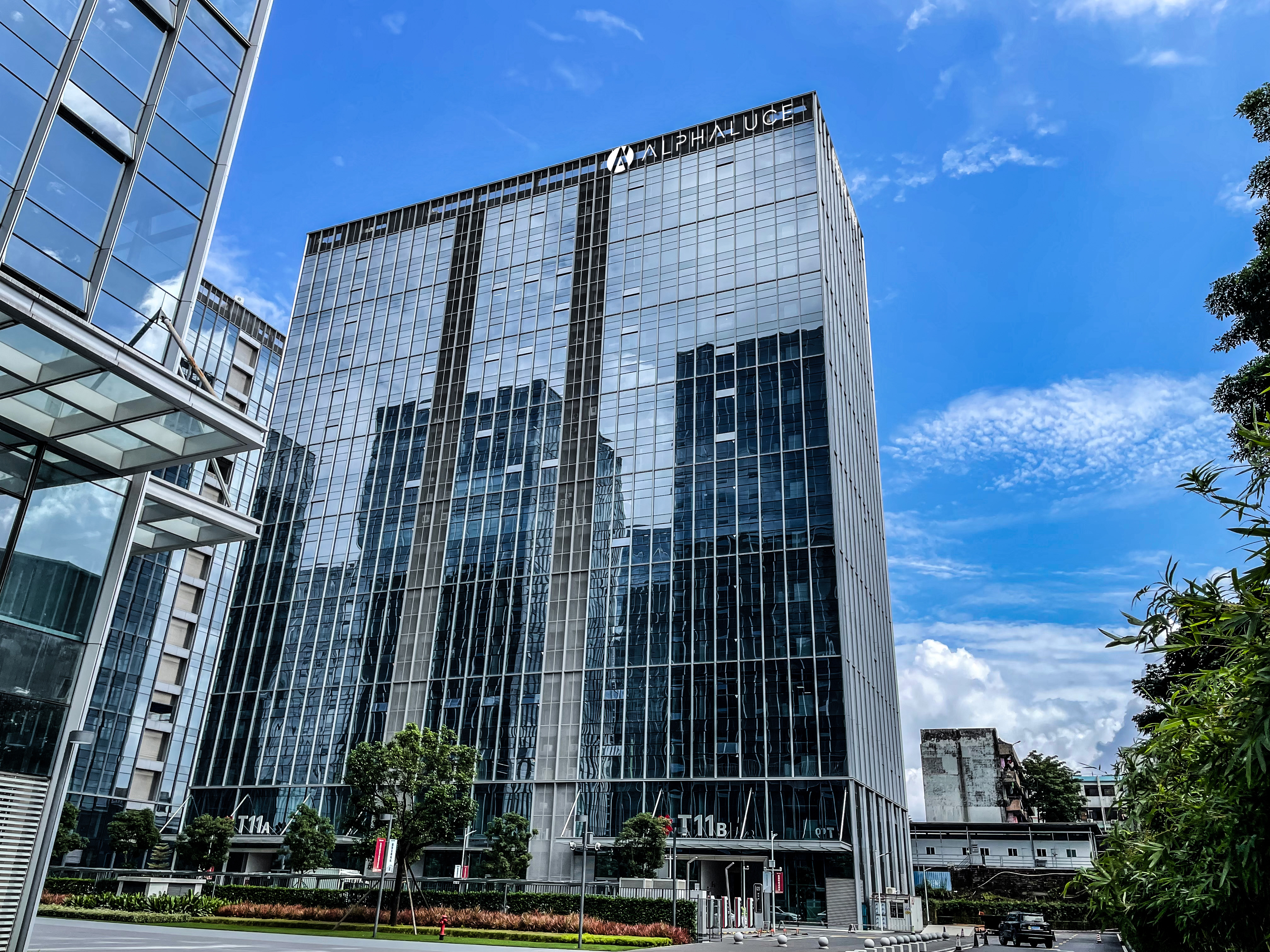 ALPHALUCE — integrated architectural lighting design, R&D, manufacturing and sales. (Image: ALPHALUCE)
Have Questions or Need More Details?
Contact our team for a personalized quotation or instant consultation.
Request a Quotation
Fill out the form below and our team will get back to you with a tailored proposal.
WhatsApp Direct Chat
Prefer to chat in real-time? Message us on WhatsApp for instant assistance & quick answers.
- Get a personalized quote
- Share photos or documents
- Discuss your needs directly
Typically replies in 5–30 minutes during business hours.