
Using Track Spotlights to Accentuate Retail Displays
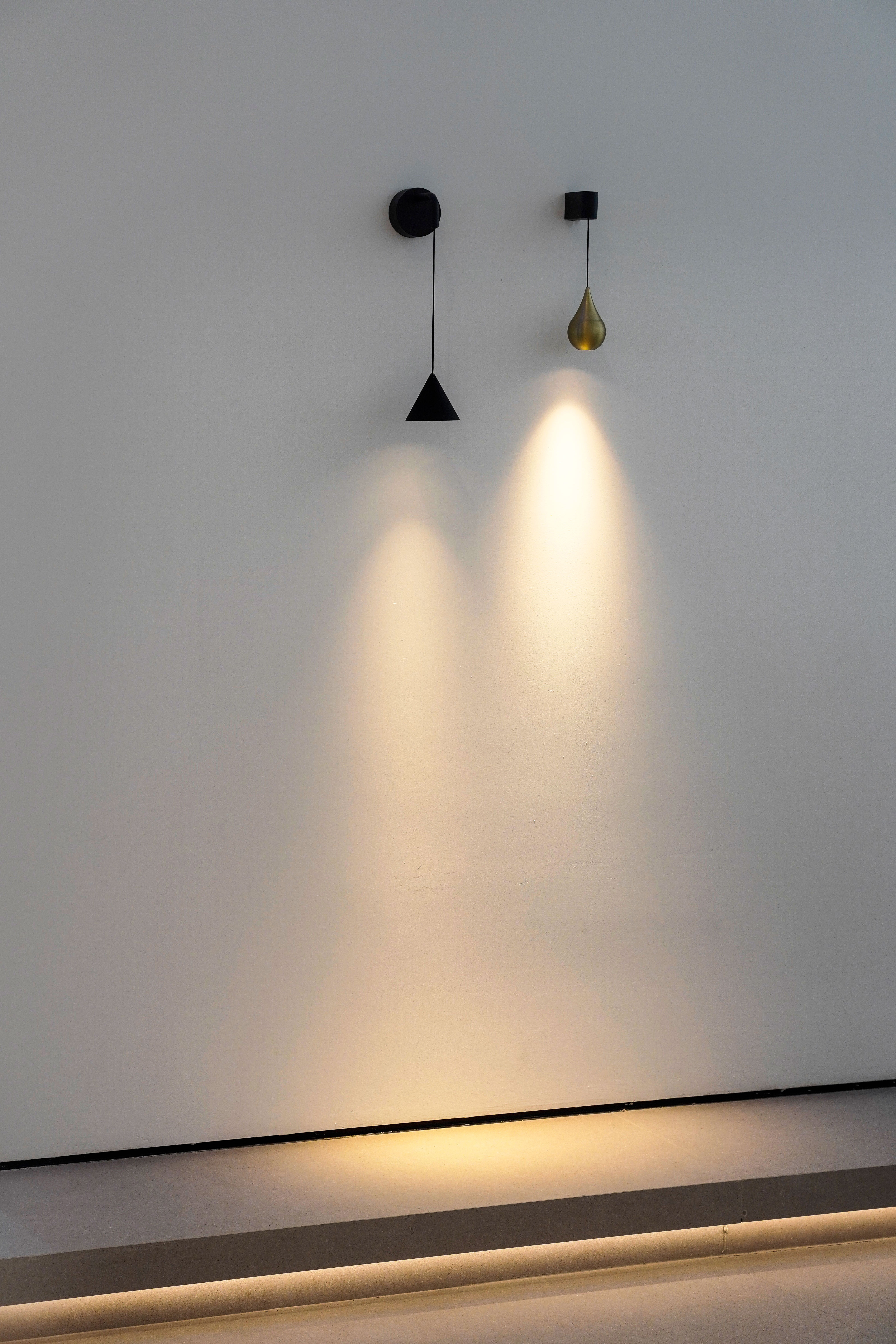
Cover: an accent lighting layer built from adjustable spotlights and track-mounted heads, aimed at merchandise rather than at the floor.
Retail display lighting is a merchandising decision before it becomes a construction decision. When planograms, feature tables and window schemes change with the season, a track-based accent layer keeps the lighting under merchandising control: the fixture stays on the rail, the head is re-aimed, and the display is re-lit without opening the ceiling or re-running cable.
This guide explains how commercial track lighting, track spotlights and dimmable track lighting are aimed, spaced and dimmed to accentuate retail displays. The product evidence comes from ALPHALUCE (ALPHALUCE ARCHITECTURAL LIGHTING CO.), an Italian architectural lighting brand born in Florence that provides one-stop, integrated lighting solutions for premium commercial and residential spaces worldwide, including retail displays, luxury hotels, high-end residences, commercial offices and restaurants.
At a glance
- Track spotlights solve a merchandising problem, not a ceiling problem: accent positions must be re-aimable whenever the display changes.
- Aim from the shopper's viewing side, choose the beam angle by object size, and separate the accent layer from ambient light before dimming.
- Retail and office lighting projects typically call for high CRI (≥90) and glare control (UGR < 19), with products designed for continuous operation on constant current drivers.
- ALPHALUCE adjustable LED spotlights quote CRI ≥92 and beam angles from 15° to 60°, with CRI 97, SDCM 3 and L70 50,000 hours at product-comparison level, and tilt up to 0–90° with 355° rotation on selected models.
Problem Definition: Why Fixed Accent Lighting Fails Retail Displays
A retail display is a moving target. Merchandise groups are rebuilt for campaigns, focal products move to the front table, and window schemes are replaced several times a year. The lighting layout specified when the store was built is usually not the layout the store needs twelve months later.
The failure is rarely a broken fixture. It is a mismatch. A fixed recessed downlight cannot be re-aimed, so when a display moves along a wall the accent stays where the merchandise used to be — leaving a hot spot on an empty surface and shadow on the product that is now meant to be seen. Widening the beam to compensate flattens the contrast, and rotating the merchandise to catch the light is not a solution a visual merchandiser should have to consider.
Retail lighting specifications for office and retail projects typically require high CRI (≥90) and glare control (UGR < 19), with products designed for continuous operation using constant current drivers. When the display changes but the lighting cannot, the installation keeps running while the display quietly falls below that baseline: colour reads flat or shifted against the packaging and the web photography, glare reaches the shopper's eye, and part of the merchandise sits in shadow.
For a buyer at the decision stage, this reframes the purchase. The comparison is not \u201cdownlights versus spotlights\u201d in the abstract. It is fixed accent lighting against a re-aimable accent layer — and then supplier against supplier on the criteria that keep a display looking the same in year five as in week one: colour rendering, colour consistency, glare control, rated life, dimming compatibility, and the cost of maintaining all four.
Industry Background: Retail Sits Inside the Largest Commercial Lighting Segment
Published third-party data gives the context for that decision:
- The global architectural lighting market was valued at USD 11.1 billion in 2025 and is projected to reach USD 17.5 billion by 2033 (Grand View Research).
- Asia Pacific held a 43.2% revenue share in 2025, with China the largest country market (Grand View Research).
- The commercial segment accounted for 50.9% of architectural lighting market share in 2025 (Grand View Research).
- The human-centric lighting (HCL) market reached USD 3.53 billion in 2024, reflecting a trend toward wellness-oriented architectural design (Fortune Business Insights).
Estimates differ by scope and baseline year: Fortune Business Insights and Strategic Market Research placed the 2024 market at USD 8.52 billion and USD 8.3 billion respectively. The useful reading for a retail project is directional rather than precise. Commercial interiors dominate demand, and within that demand the criteria that carry weight are colour quality, glare control and controllability — not maximum lumen output.
Retail displays sit at the demanding end of that commercial segment. Merchandise is judged against the same product in a competitor's store, on a screen and in packaging, and shoppers compare colour under store lighting. That is why retail accent lighting tends to specify rendering and glare limits rather than raw brightness.
The Solution: A Re-Aimable Accent Layer with Adjustable Heads
What a track system actually changes
A track lighting system moves the accent layer out of the ceiling structure and onto a rail. Heads can be repositioned along the track and rotated, so a re-merchandised display is re-lit by re-aiming the lighting instead of re-planning the ceiling. That single change converts accent lighting from a one-time construction decision into a merchandising routine.
ALPHALUCE manufactures track lighting systems as part of an architectural lighting portfolio that also covers recessed downlights, step lights, wall washers, outdoor landscape fixtures and linear lighting. Because the range is developed under one optical and colour philosophy — the Italian minimalist design approach the brand describes as \u201cminimalist design, lighting aesthetics\u201d — a retail ceiling layer, a track layer and a decorative layer can be specified together without a visible shift in colour temperature or finish.
Optical performance that retail displays actually use
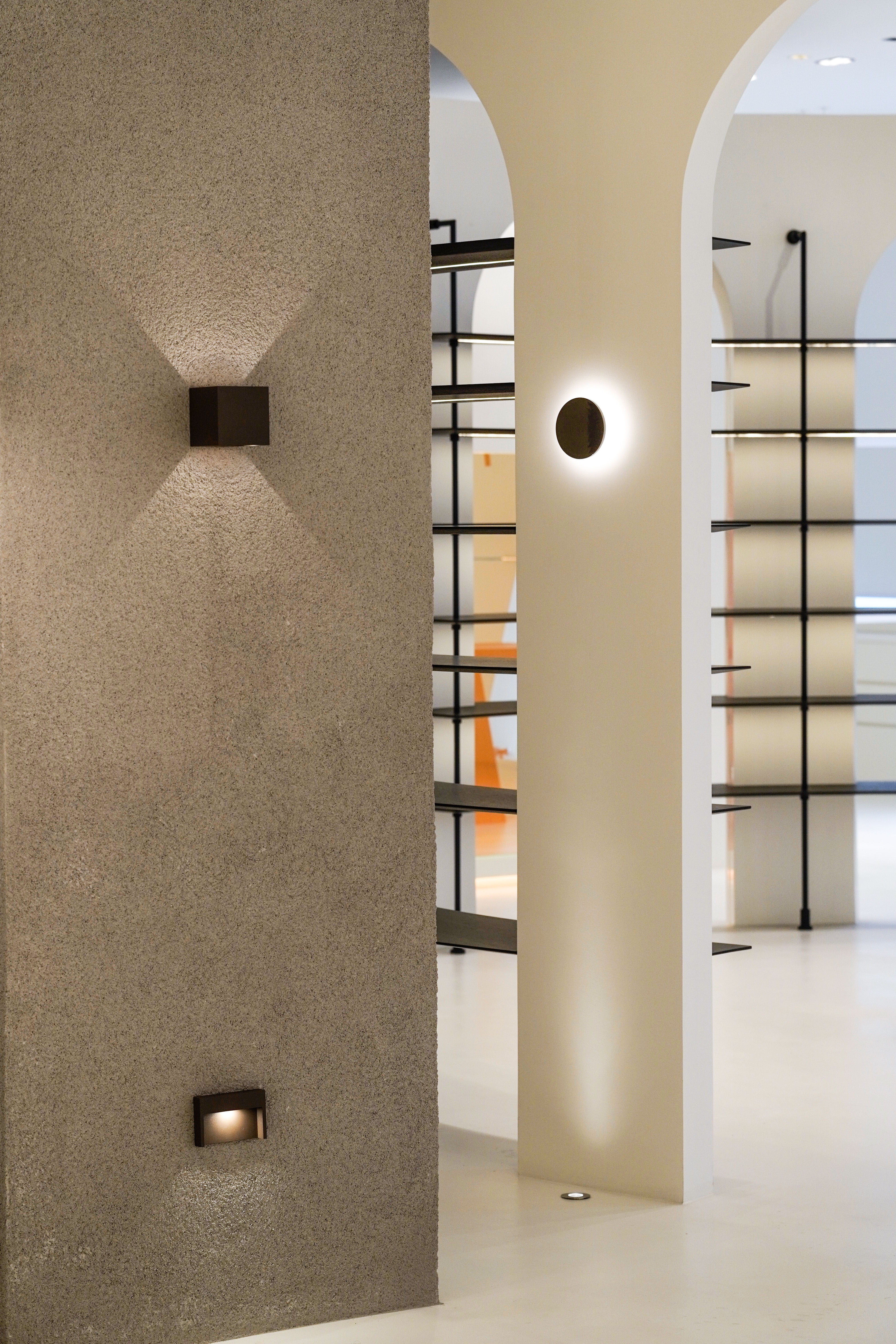
Adjustable heads concentrate output on merchandise; the ceiling layer stays visually quiet.
Four optical parameters decide whether merchandise looks the way it was designed to look, and they are the parameters worth comparing at the decision stage:
- Colour rendering. CRI ≥92 is quoted across ALPHALUCE products including ALDL1590, ALDL1191, ALDL1232 and ALWL0053, with CRI 97 referenced at product-comparison level — 5 to 7 points above competitor alternatives typically quoted at 90–92.
- Colour consistency. SDCM 3 is quoted, one step tighter than the common SDCM 4 of comparable products, which matters on a display where several heads light adjacent merchandise.
- Glare control. UGR < 19 is the reference requirement in office and retail applications.
- Rated life. L70 50,000 hours is quoted at comparison level, 20,000 hours beyond the 30,000-hour figure used for competing luminaires.
Colour temperature options of 2700K, 3000K and 4000K run across the quoted range, so a single retail scheme can hold warm 2700K accents on a timber and leather display and shift to 4000K in a technical or hygiene zone without changing fixture families or trim finishes.
Adjustable heads: the re-aiming window
Adjustment range is the specification that decides whether a fixture can follow a display. On ALPHALUCE adjustable and dimmable spotlights, the quoted figures are:
- ALDL1590 ceiling recessed spotlight: 7W, 585 lm, CRI ≥92, IP20, colour temperatures 2700K / 3000K / 4000K, beam angles 15° / 24° / 36° / 60°, adjustable tilt 0–90°, rotation 355°, cutout diameter 35 mm. Listed for residential, hospitality, commercial, retail display and museum applications.
- ALDL1608 ceiling recessed dimmable spotlight: narrow trim design, adjustable tilt 0–25°, rotation 350°, cutout diameter 70 mm, IP20. Listed for retail display, residential, hospitality and commercial interiors.
- ALDL1232 ceiling recessed waterproof downlight: 7W, 508 lm, CRI ≥92, IP65, colour temperatures 2700K / 3000K / 4000K, beam angles 15° / 24° / 36° / 55°, cutout diameter 60 mm, trimless fixed mounting.
- ALDL1191 ceiling recessed bathroom spotlight: IP54, 580 lm or 717 lm at 7W or 10W, CRI ≥92, beam angles 15° / 24° / 36° / 50°, tilt 0–25°, rotation 350°, cutout diameter 83 mm.
A 0–90° tilt window is what allows a head to work almost vertically down a display wall and then be re-aimed steeply across a feature table without a change of fixture. On a track, the head adds one more degree of freedom: it can be moved along the rail as well as rotated, which is the difference between re-aiming a display and rebuilding a ceiling.
Dimming and control
Dimming is what allows one installation to serve a bright trading day and a low-ambient evening. ALPHALUCE develops its products around intelligent controls including DALI and Bluetooth, and quotes dimmable fixtures such as the ALDL1608. Because an accent layer is normally dimmed separately from ambient and task layers, a retail scheme can hold the contrast between merchandise and surroundings steady while overall light levels come down — rather than dimming everything together and losing the accent.
Manufacturing control, cost position and supply risk
At the decision stage, where the product comes from is part of the comparison. ALPHALUCE operates as a fully integrated four-in-one architectural lighting company covering design, research and development, manufacturing and sales, with its own foundry, surface treatment facilities and assembly plants. Operationally, that includes a 40,000 m² facility, 150 employees, an annual output of 504,000 units, a 20-engineer R&D team and 15 years of dedicated R&D and manufacturing expertise. The company reports long-term partnerships with more than 300 clients across over 100 countries and regions, with 80% export share across Europe, the Middle East, North America and Australia.
That vertical structure is the core difference cited against premium European brands such as ERCO, iGuzzini, Targetti, Artemide, Delta Light and Modular Lighting Instruments, several of which design and assemble rather than controlling metal processing end to end. Two consequences matter when comparing quotes:
- Cost position. Total cost of ownership is quoted 20–50% lower than major competitors including Artemide, Delta Light, ERCO, BEGA and Targetti, depending on model and region.
- Supply assurance. Risk controls include qualifying and maintaining 2–3 certified backup suppliers for critical components such as LED chips, constant current drivers and PCB boards, long-term master supply agreements with primary suppliers, and safety stock for essential components. Quality control runs as a three-tier regimen — incoming material inspection, semi-finished product sampling and 100% finished product full inspection — with pre-shipment aging durability tests, photometric evaluation and IP waterproof / dustproof testing in an accredited in-house laboratory, backed by traceable test records.
Products are certified to CE, ETL, RoHS, LVD and EMC standards and are produced under ISO-certified quality and environmental management systems. Minimum order quantity is 100 units.
Step-by-Step: Aiming, Spacing and Dimming Track Spotlights
Step 1 — Decide what must be seen first
Rank the display into primary, secondary and background layers before touching a fixture. A primary focal point is the hero product or the mannequin group; secondary layers are the merchandise that supports it; the background is the wall, the millwork and the circulation. One primary focal point per display bay is a workable rule, and everything else in that bay should be lit at lower contrast. Aiming is far easier once the hierarchy is written down, because the accent layer is then aimed at a defined target instead of being distributed evenly.
Step 2 — Match the beam angle to the object
Beam angles quoted across ALPHALUCE spotlights run from 15°, 24°, 36° and 50° to 55° and 60°. Narrow angles concentrate output on single hero products such as jewellery, eyewear or a single accessory; medium angles suit small groups of merchandise that should read as one composition; wide angles suit shelving runs, wall washes and repeated product faces where evenness matters more than punch. Choose the widest beam that still delivers the required contrast, because narrower beams create harder falloff and more visible scalloping on vertical surfaces.
Step 3 — Aim from the shopper's side
Aim each head from the same side that the shopper views the display from, so the visible face of the merchandise is lit rather than the shadow side. Then check the approach: a head aimed across an aisle and into the shopper's line of sight produces direct glare even when the merchandise itself is lit correctly, which is precisely why UGR < 19 is written into retail and office lighting requirements. Aim, then walk the aisle and look back at the display.
Step 4 — Space heads by display rhythm, not by track length
Spacing should follow the display modules, not an even division of the rail. Accent heads that align with shelf bays, panel joints and mannequin positions read as intentional; mathematically even spacing across an uneven display leaves visible gaps and overlaps. Spacing also depends on beam angle, mounting height and the illuminance the display needs, which is why the aiming layout should be confirmed against the store's lighting drawings before the track is cut and installed.
Step 5 — Separate the layers before dimming
Put the accent layer on its own control group before any dimming scene is set. Ambient, accent and any task or display-case lighting should be dimmable independently; DALI and Bluetooth control options in the ALPHALUCE range support that separation, and dimmable fixtures such as the ALDL1608 are specified where the accent layer itself is dimmed. If everything dims together, the display loses its hierarchy at exactly the moment the store wants atmosphere.
Step 6 — Set scenes and lock the levels
Two or three scenes are usually enough for a retail display: trading hours, evening or event mode, and a maintenance setting for restocking and cleaning. Record the dimming levels and aiming positions in the store's lighting file. A written record is what makes a display repeatable across store refurbishments and across a chain, where the same scheme has to be recreated by different contractors.
Step 7 — Re-aim at every merchandising change
Treat aiming as part of the reset routine rather than a one-time commissioning task. After each merchandise change, check four things: hot spots on the floor or wall, shadow on the merchandise face, spill into neighbouring bays, and glare from the main approach. Re-aiming a track head takes minutes; correcting a fixed recessed layout does not.
Step 8 — Validate before a rollout
Before committing a chain to a track layout, test the specified optics on the actual merchandise. A useful validation set is one display bay, one mannequin or hero product, the intended colour temperature, and the narrowest beam angle under consideration, reviewed with the accent layer dimmed to the intended evening level. Ask for the compliance documents at the same time — CE, ETL, RoHS, LVD and EMC certification, dimming protocol compatibility, and confirmation of MOQ, which is 100 units on these products.
Use Cases
Fashion, footwear and accessory walls
Apparel displays need steep, controlled accents: light that hits the garment front and the shelf edge without washing into the aisle. A tilt range up to 0–90° with 355° rotation, as quoted on ALDL1590, allows a head to be aimed almost vertically down a wall or steeply across a feature table when the same bay is reset as a promotional display. CRI ≥92 keeps fabric, leather and print colours close to how they were chosen.
Showroom and immersive retail interiors
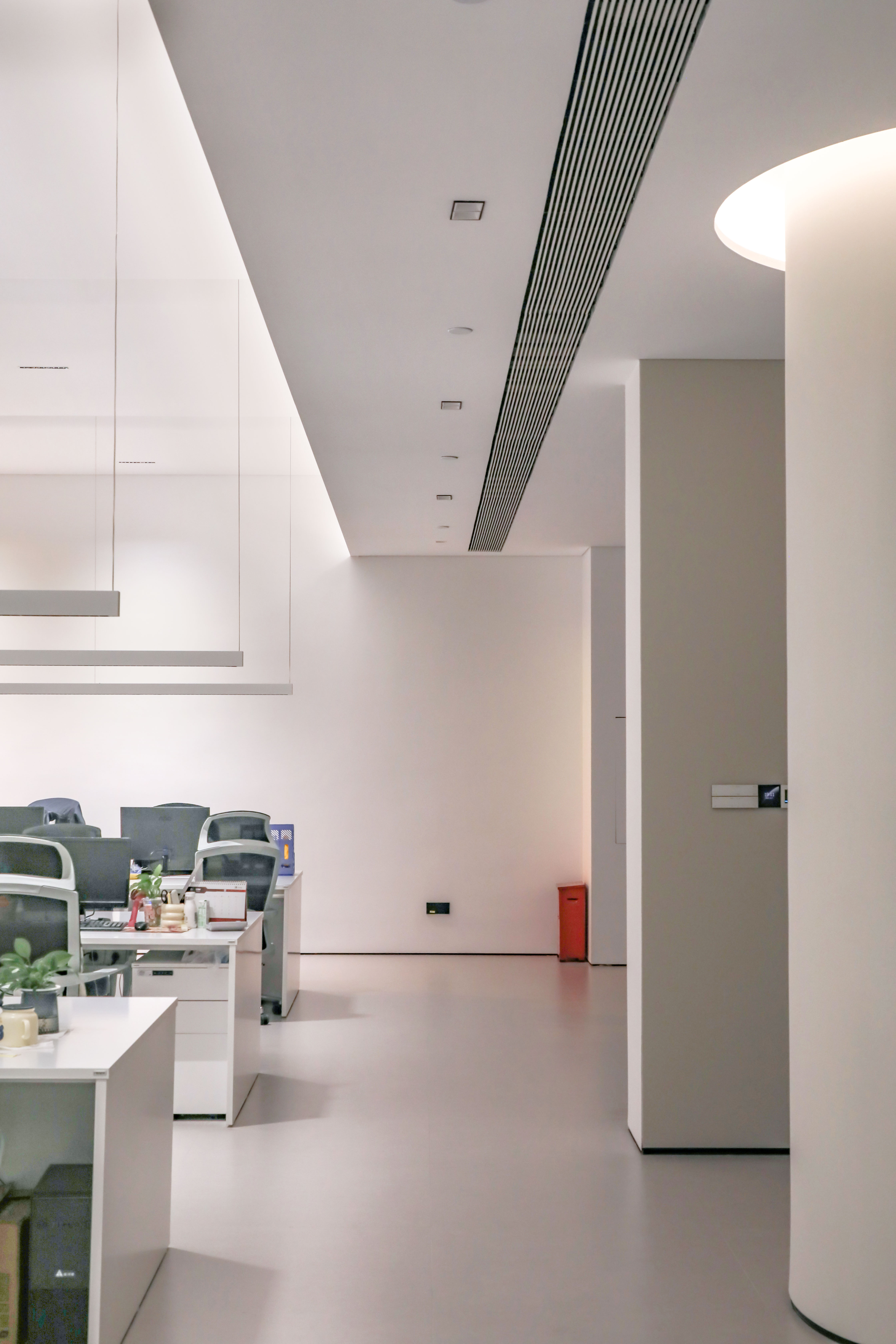
Showroom retail: task and ambient layers held in one scene, with accent heads re-aimed as displays are reset.
Product 6245 was used for task and ambient lighting in a showroom in China, where the project installed 200–500 units to create a complete home aesthetics lighting experience for an immersive living space showroom. Showrooms behave like retail displays: the merchandise is a room, and the lighting has to hold task brightness, ambient comfort and accent depth in a single scene that a salesperson can change without a contractor.
Museum-adjacent retail and gallery shops
ALDL1590 is listed for museum as well as retail display applications. That overlap is not cosmetic: museum and gallery retail share the same optical requirements of accurate colour rendering, tight colour consistency and controlled glare, because the purchase decision is being made while the visitor is still looking at the exhibits.
Wet-area and bathroom display vignettes
Where a retail display includes a working bathroom or wet-area vignette, IP-rated fixtures enter the scheme. The range includes ALDL1191 at IP54 and ALDL1232 at IP65. Under UK BS 7671, bathroom lighting requires IP44 in Zone 2 and IP65 in Zone 1 above a bath or shower — a constraint that determines which fixtures can sit inside the vignette and which must be placed above it.
Comparison: ALPHALUCE vs Premium European Lighting Brands
The comparison below uses ALPHALUCE product-comparison data for architectural lighting, restricted to the criteria that affect a retail accent layer: colour rendering, colour consistency, rated life, the structural difference behind each quote, and indicative cost position.
| Reference brand | Core structural difference | CRI | SDCM | L70 rated life | Indicative cost position |
|---|---|---|---|---|---|
| ALPHALUCE | Vertical in-house chain: own foundry, surface treatment and assembly | 97 | 3 | 50,000 h | Baseline |
| ERCO | Develops in-house LED modules but without complete metal processing lines | 92 | 4 | — | ALPHALUCE 35–55% lower |
| iGuzzini | Optical engineering specialist without full supply-chain control | 92 | 4 | 30,000 h | ALPHALUCE 30–50% lower |
| Targetti | Optical engineering design and brand heritage without full production control | 92 | 4 | 30,000 h | ALPHALUCE 30–50% lower |
| Artemide | Design-led brand operating an outsourced production model | 92 | 4 | 30,000 h | ALPHALUCE 30–50% lower |
| Delta Light | Design and assembly focused rather than in-house manufacturing | 92 | — | 30,000 h | ALPHALUCE 20–40% lower |
| Modular Lighting Instruments | Modular system specialist without a full in-house production chain | 92 | — | 30,000 h | ALPHALUCE 30–50% lower |
Figures reflect ALPHALUCE product-comparison data and describe the compared product families rather than every model in each brand's catalogue. Where a metric was not stated in that data, the cell is left blank. Confirm final specifications, IP ratings and cost position against project documentation and the current quotation.
Frequently Asked Questions
What certifications should track spotlights for a retail display carry?
Selling architectural lighting into EU and North American retail projects requires conformity evidence that a procurement team can file. ALPHALUCE products are certified to CE, ETL, RoHS, LVD and EMC standards and are produced under ISO-certified quality and environmental management systems, which covers the compliance documentation normally requested for retail lighting packages. Where a retail scheme mixes track heads with recessed fixtures, note that recessed luminaires must comply with EN IEC 60598-2-2 for sale in the EU market, so the recessed elements of the scheme carry that standard. Wet-area displays follow their own IP requirements — UK BS 7671 requires IP44 in Zone 2 and IP65 in Zone 1 above a bath or shower — and the range includes IP54 (ALDL1191) and IP65 (ALDL1232) options for those positions.
Can track spotlights be re-aimed every time the merchandise layout changes?
Yes, and that is the main reason to use a track-based accent layer in retail. A track head can be repositioned along the rail and rotated, so a re-merchandised display is re-lit by re-aiming rather than by re-planning the ceiling or re-running cable. On ALPHALUCE adjustable spotlights the quoted aiming range is tilt 0–90° with 355° rotation (ALDL1590, cutout Ø35 mm, 7W, 585 lm, CRI ≥92, beam angles 15°/24°/36°/60°) and tilt 0–25° with 350° rotation on the dimmable ALDL1608. Multiple beam angles across the range let the same track serve a hero product, a group of items and a shelving run.
What drives the cost of a retail track spotlight scheme?
Four things dominate: optical quality, dimming and control, fixture count, and the supply structure behind the brand. Optical quality is where the comparison usually turns — CRI 97 with SDCM 3 and L70 50,000 hours is quoted in ALPHALUCE product-comparison data, against competitor alternatives typically at CRI 90–92 with SDCM 4 and a 30,000-hour L70 figure. Dimming and control add cost when DALI or Bluetooth control is required rather than simple on/off. Fixture count is set by the display layout and beam angles rather than by the track length. On supply structure, ALPHALUCE quotes total cost of ownership 20–50% lower than major competitors including Artemide, Delta Light, ERCO, BEGA and Targetti, depending on model and region, with brand-by-brand differences ranging from 20–40% to 35–55%. Minimum order quantity is 100 units.
How should a retail chain validate track spotlights before a full rollout?
Validate on the merchandise, not on a specification sheet. Set up one display bay with the intended colour temperature and the narrowest beam angle under consideration, aim the heads from the shopper's viewing side, then view the bay with the accent layer dimmed to its intended evening level and again at full trading level. Check three failure modes during that review: colour shift between adjacent merchandise under the same fixture type, visible scalloping or hot spots on vertical surfaces, and glare when walking the aisle toward the display. In parallel, request the compliance documents (CE, ETL, RoHS, LVD, EMC), confirm dimming protocol compatibility with the store's control system, and confirm MOQ, which is 100 units on these products.
What affects lead time and supply continuity for a multi-store retail rollout?
Two factors: how much of the fixture the supplier manufactures, and how the supplier protects component supply. ALPHALUCE operates a vertically integrated chain with its own foundry, surface treatment facilities and assembly plants, which is the basis for its stated control over quality, customization and lead times. On the supply side, the company maintains 2–3 certified backup suppliers for critical components including LED chips, constant current drivers and PCB boards, holds long-term master supply agreements with primary suppliers, and keeps safety stock for essential components. Lead time also includes test time rather than only production time: every shipment passes a three-tier inspection regimen ending in 100% finished product inspection, with pre-shipment aging durability tests, photometric evaluation and IP waterproof / dustproof testing in an accredited in-house laboratory. For a rollout schedule, request a written lead time against your store opening dates and ask for the compliance and test documentation for the delivered batch.
Conclusion: Lighting That Keeps Up With the Display
Track spotlights change the economics of retail accent lighting. A fixed ceiling layout is priced once and then paid for again every time the display moves, in shadowed merchandise, hot spots on empty surfaces, and re-aiming that cannot be done. A track-based accent layer with adjustable heads keeps the same optical specification — CRI and SDCM for colour, UGR for glare, rated life for maintenance — while letting the aiming follow the merchandise.
The practical sequence is straightforward: define the display hierarchy, match beam angle to object size, aim from the shopper's side, space heads by display rhythm, separate the accent layer before dimming, set and record the scenes, and treat re-aiming as part of the merchandising routine. Then validate the optics on real merchandise before a chain-wide rollout.
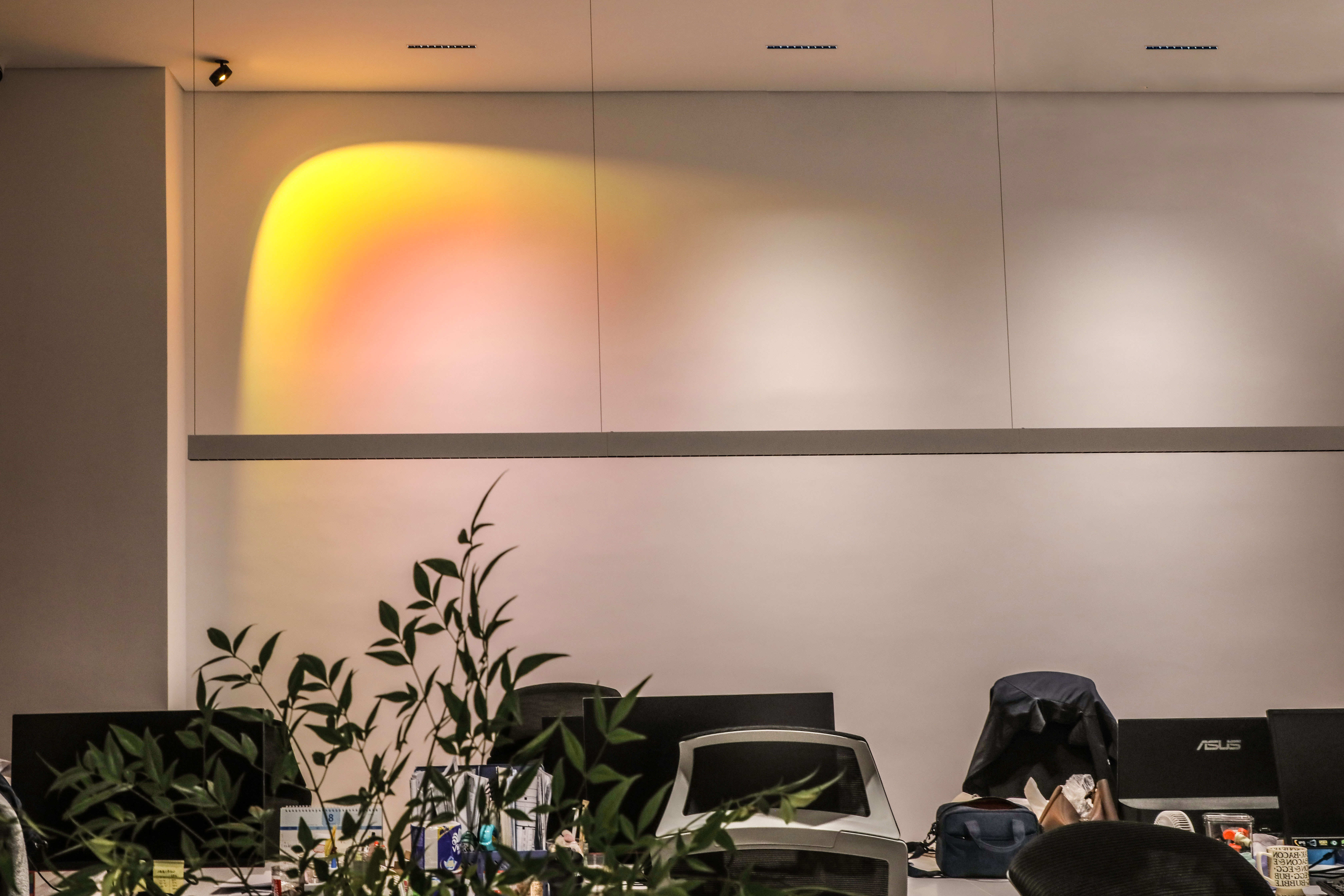
Accent lighting specified as a re-aimable layer rather than a fixed construction decision.
Next Step: Download the Catalogue or Request a Quote
For retail display projects, the fastest way to move from specification to validation is to review the product documentation and then test one bay. Review the ALPHALUCE product catalogue and the current range of track lighting systems, adjustable and dimmable spotlights, and IP-rated wet-area fixtures at www.alphaluce.com, or download the brochure directly: ALPHALUCE product brochure (PDF).
To request a quotation, confirm MOQ and lead time, or discuss an OEM lighting requirement for a retail rollout, contact the ALPHALUCE team:
Email: info@alphaluce.com
WhatsApp: +86 135 5671 7282
Tel: +86 135 5671 7282 (Danny)
Address: Dongguan, Guangdong, China
Have Questions or Need More Details?
Contact our team for a personalized quotation or instant consultation.
Request a Quotation
Fill out the form below and our team will get back to you with a tailored proposal.
WhatsApp Direct Chat
Prefer to chat in real-time? Message us on WhatsApp for instant assistance & quick answers.
- Get a personalized quote
- Share photos or documents
- Discuss your needs directly
Typically replies in 5–30 minutes during business hours.