
LED Strip vs. Pendant Luminaire: Choosing the Right Architectural Light
Architectural Lighting Solutions · Comparison Guide
LED Strip vs. Pendant Luminaire: Choosing the Right Architectural Light
Flexible LED strip and the pendant luminaire appear in the same specification documents more often than their design suggests. One is a linear source that is cut, concealed and blended into the architecture. The other is a self-contained fixture that hangs in the room and is meant to be seen. They are not interchangeable at any level — light distribution, installation complexity, visual impact and compliance requirements all pull in different directions.
Short answer: choose LED strip when the light must be continuous, concealed, or used to shape a surface — coves, cove-lit ceilings, niches, shelving, feature walls and wet areas. Choose a pendant luminaire when the fixture itself is part of the design intent and the space needs a defined, controlled pool of light over a dining table, counter, reception desk or lounge zone.
The Real Question Behind “LED Strip or Pendant Luminaire”
The two categories are usually compared on the wrong axis. Buyers line them up by watts, by price per unit, or by finish, and then discover at installation stage that the comparison never addressed the actual lighting task.
Underneath the product names, the categories are structurally different:
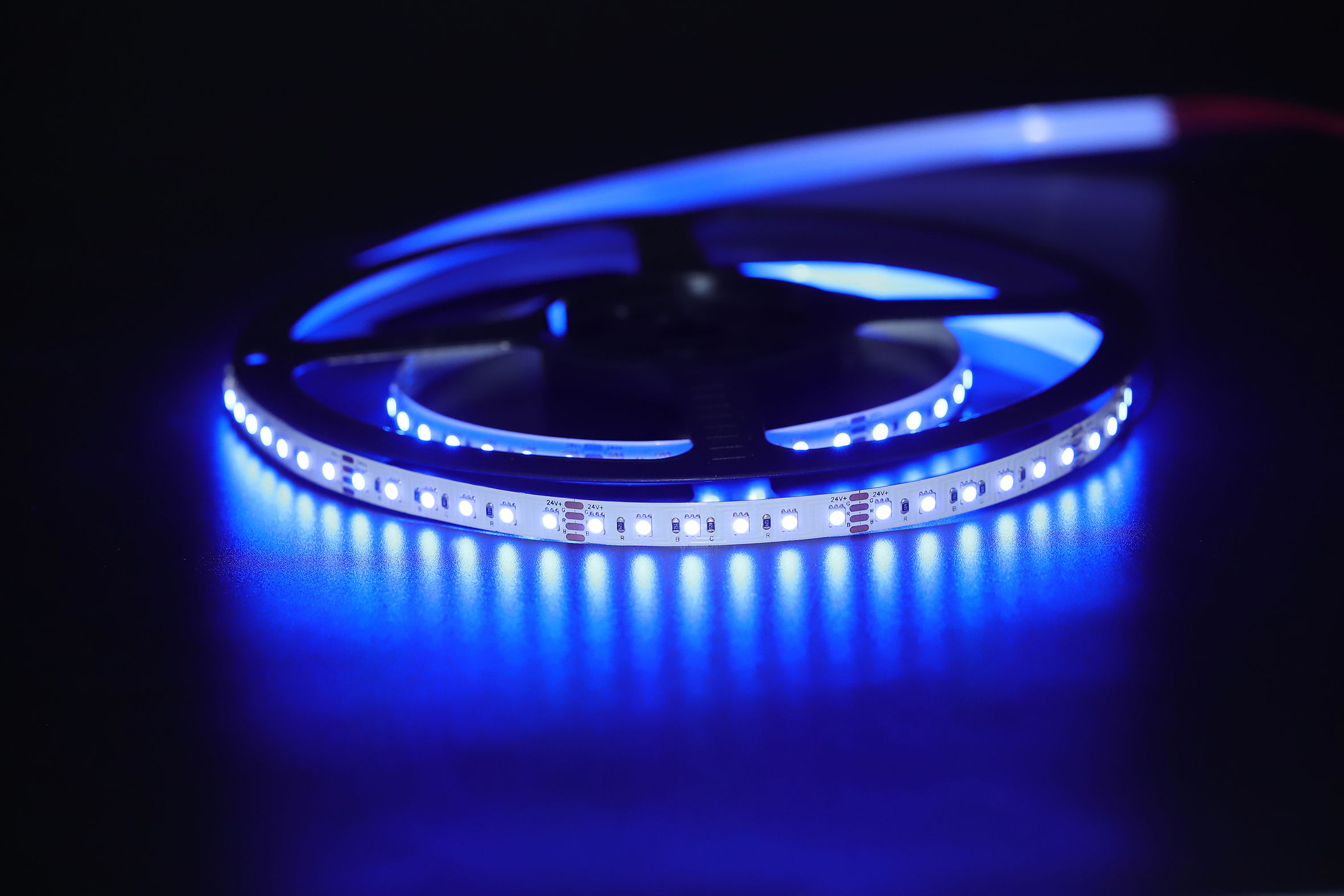
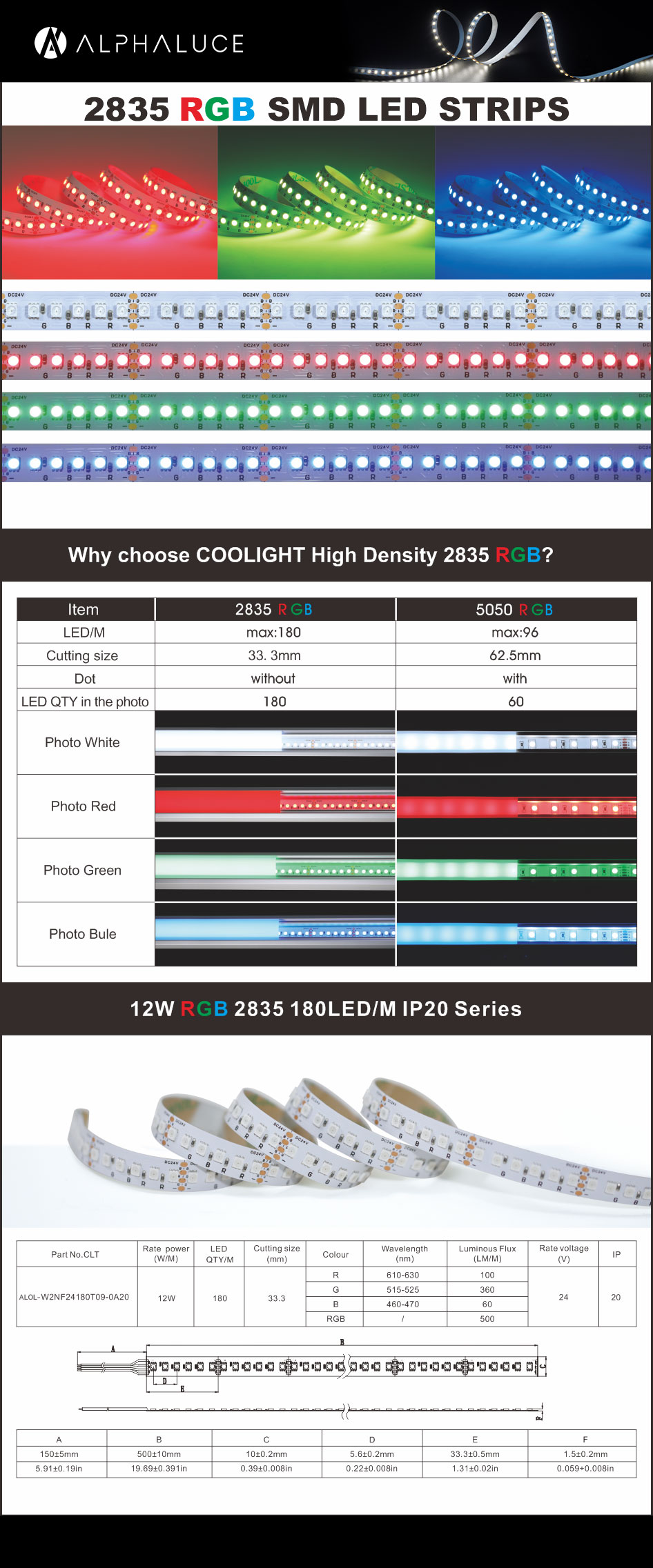
- LED strip is a flexible linear light source supplied on a reel, cut to length and mounted inside a channel, cove or concealed detail. It has no beam angle, because it emits along a line rather than into a defined cone. ALPHALUCE’s RGB LED strip (Digital chasing LED strip 120LED/m 24V IP20) is rated 9.6 W / 14.4 W at DC24 V, with 120 LEDs per metre, a 50 mm cut size, a maximum run length of 5 m, CRI > 80 and colour temperature options of 4000K and RGB.
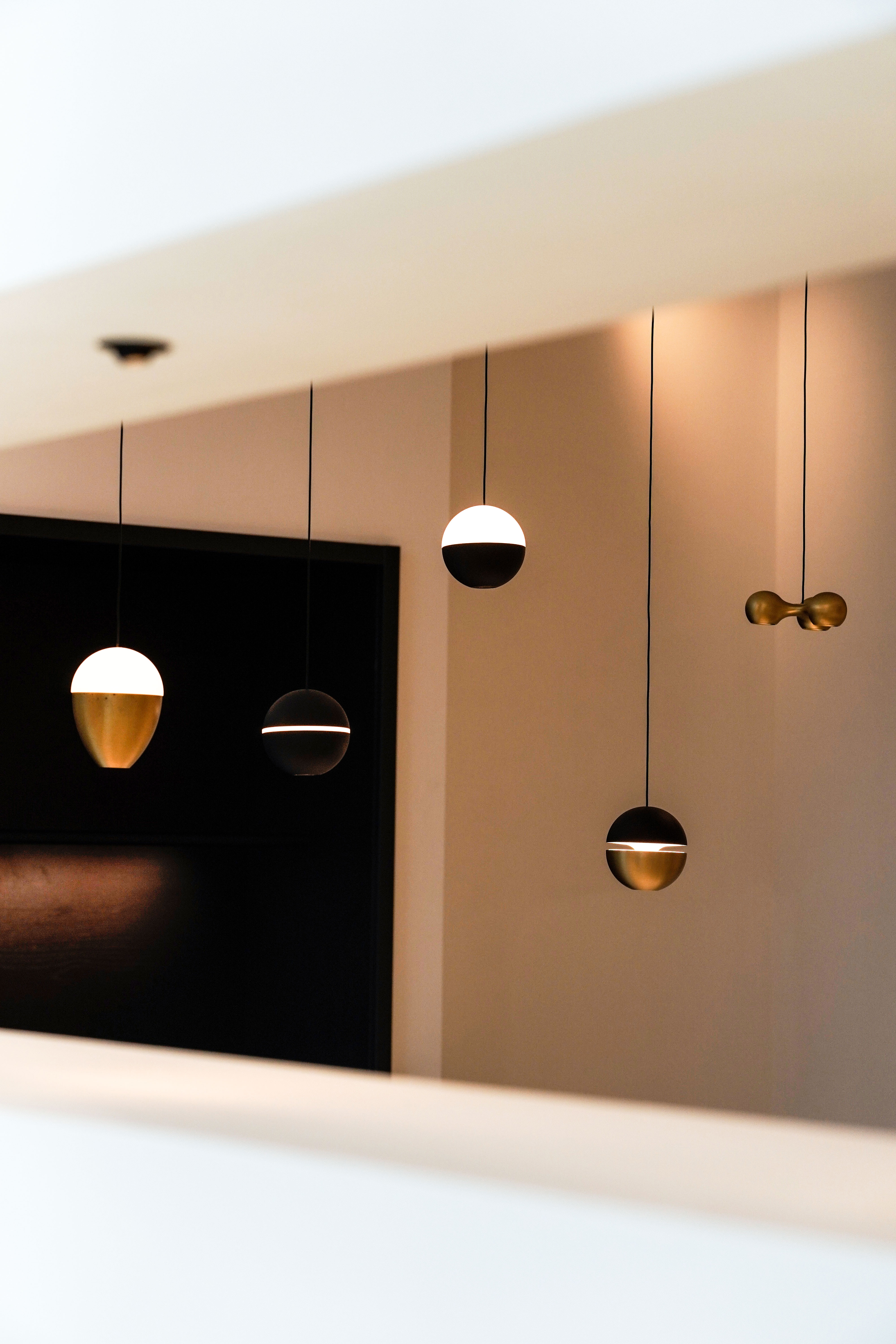
- A pendant luminaire is a self-contained fixture with a fixed mounting, delivering a defined distribution into the room. ALPHALUCE Pendant Lights ALPH0067 is rated 8 W at 630 lm with CRI ≥ 92 and beam angle options of 15°, 24°, 36° and 60°. The pendant luminaire ALPH0081 is rated 11 W at 720 lm with CRI ≥ 92, and the linear pendant lighting ALPH0070 is rated 37 W at 2800 lm with CRI ≥ 92.
Because both sit under the same umbrella of architectural lighting solutions, they are frequently treated as if one could substitute for the other. In practice the failure modes are predictable. A LED strip specified where a pendant was intended produces an even wall of light with no focal point and no control over where the illumination lands. A pendant specified where a concealed strip was intended leaves a visible fixture in a ceiling designed to read as a clean plane — and often delivers a pool of light that is too narrow for the room.
The four variables that actually separate the two categories are:
- Light distribution — continuous linear output versus a defined, aimed pool of light.
- Installation complexity — channel, driver and run-length planning versus ceiling feed, suspension and alignment.
- Visual impact — a source that disappears versus an object that organises the room.
- Performance and environment — CRI, CCT, beam angle, dimming protocol and ingress protection.
Industry Background: Why This Choice Matters More Than It Used To
The global architectural lighting market was valued at USD 11.1 billion in 2025 and is projected to reach USD 17.5 billion by 2033, according to Grand View Research. The same source records that Asia Pacific held a 43.2% revenue share in 2025, with China as the largest country market, and that the commercial segment accounted for 50.9% of the market share in 2025.
Two implications follow for specification work. First, because commercial end use dominates, the majority of projects are judged on how reliably a specified scheme performs in continuous use — not on how a single fixture looks in a catalogue. Second, the human-centric lighting (HCL) segment reached USD 3.53 billion in 2024, according to Fortune Business Insights, which reflects a shift toward wellness-oriented design goals such as colour fidelity, glare control and flicker-free operation.
Both trends shape the strip-versus-pendant decision. A concealed linear solution is usually chosen for ambient and architectural effect, where evenness and low glare matter. A visible pendant is usually chosen for accent and identity, where beam control and colour rendering matter. Getting the category right is what makes those performance expectations achievable in the first place.
A Side-by-Side Decision Framework
1. Light distribution: continuous line versus defined pool
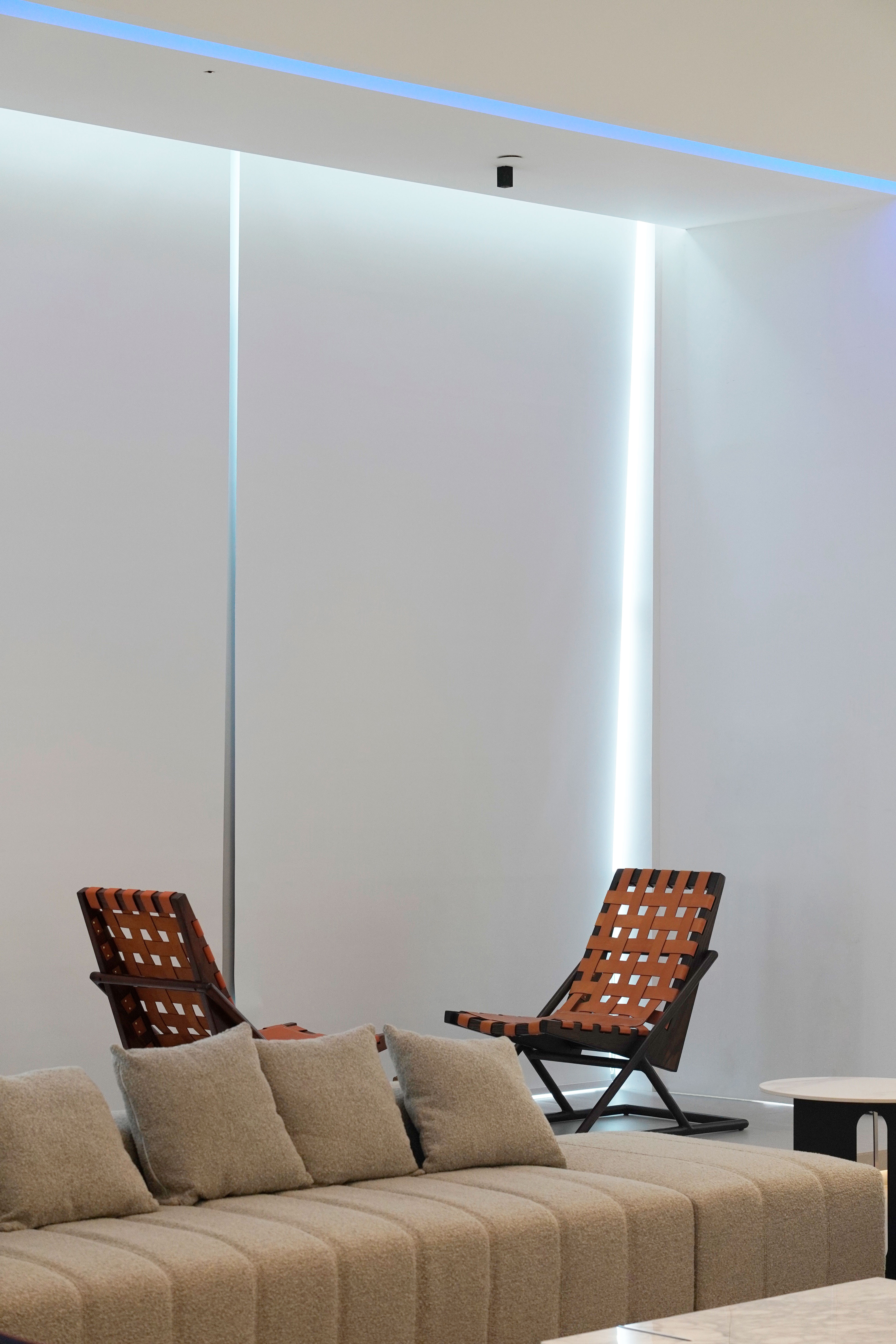
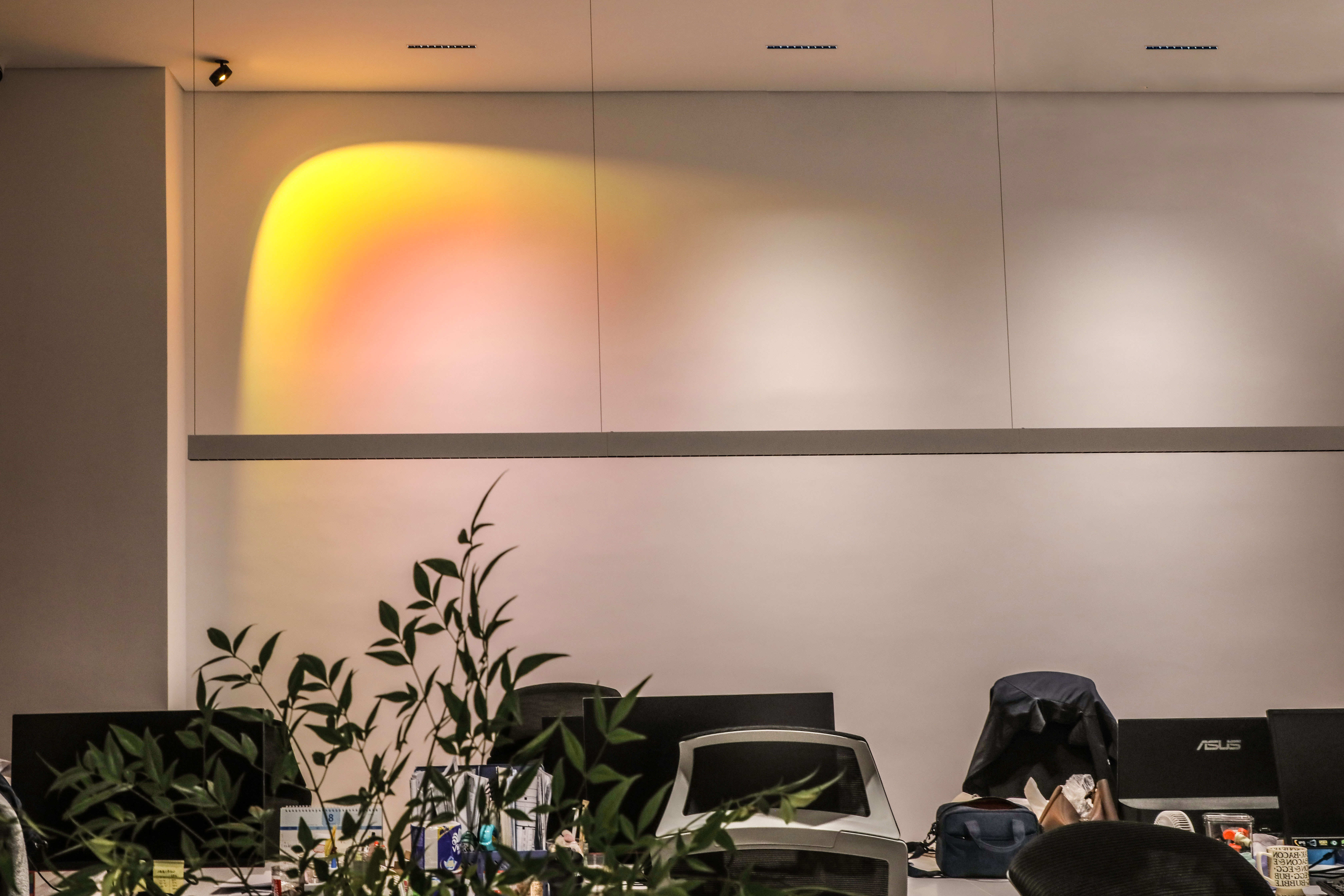
LED strip distributes light along a line with no beam angle value — the ALPHALUCE strip references list beam angle as not applicable. That makes it the right tool for washing a surface, grazing a textured wall, lighting a cove or creating a continuous line of light along a corridor ceiling. Evenness is the objective, and the fixture must not be visible.
A pendant luminaire works in the opposite direction. It produces a defined distribution that can be selected: 15°, 24°, 36° or 60° on Pendant Lights ALPH0067. That choice is what allows a specifier to place a pool of light precisely over a table or counter, keep it off nearby seating, and reduce glare for anyone looking across the room.
2. Installation complexity: channel and driver versus ceiling feed and suspension
LED strip is simple to buy and demanding to detail. The electrical layer is the main planning item: strip runs on DC24 V and requires a driver sized to the run, and because the maximum length per run on the ALPHALUCE strip references is 5 m, longer installations must be split into multiple runs with a power feed for each. A 50 mm cut size also means every length has to be planned in 50 mm increments rather than cut freely on site. Physically, the strip still needs a channel, extrusion or concealed cavity to sit in.
A pendant luminaire is a single assembly with a fixed mounting. On ALPHALUCE references, the linear pendant lighting ALPH0070 operates at AC230 V, while the strip references operate at DC24 V — a difference that changes the infrastructure required at the ceiling. The practical constraints are structural: a suspension point that can carry and align the fixture, clearance for the required drop, and a finish that has to sit correctly in the sightline, because the fixture is visible from every angle.
3. Visual impact: concealed source versus the fixture as object
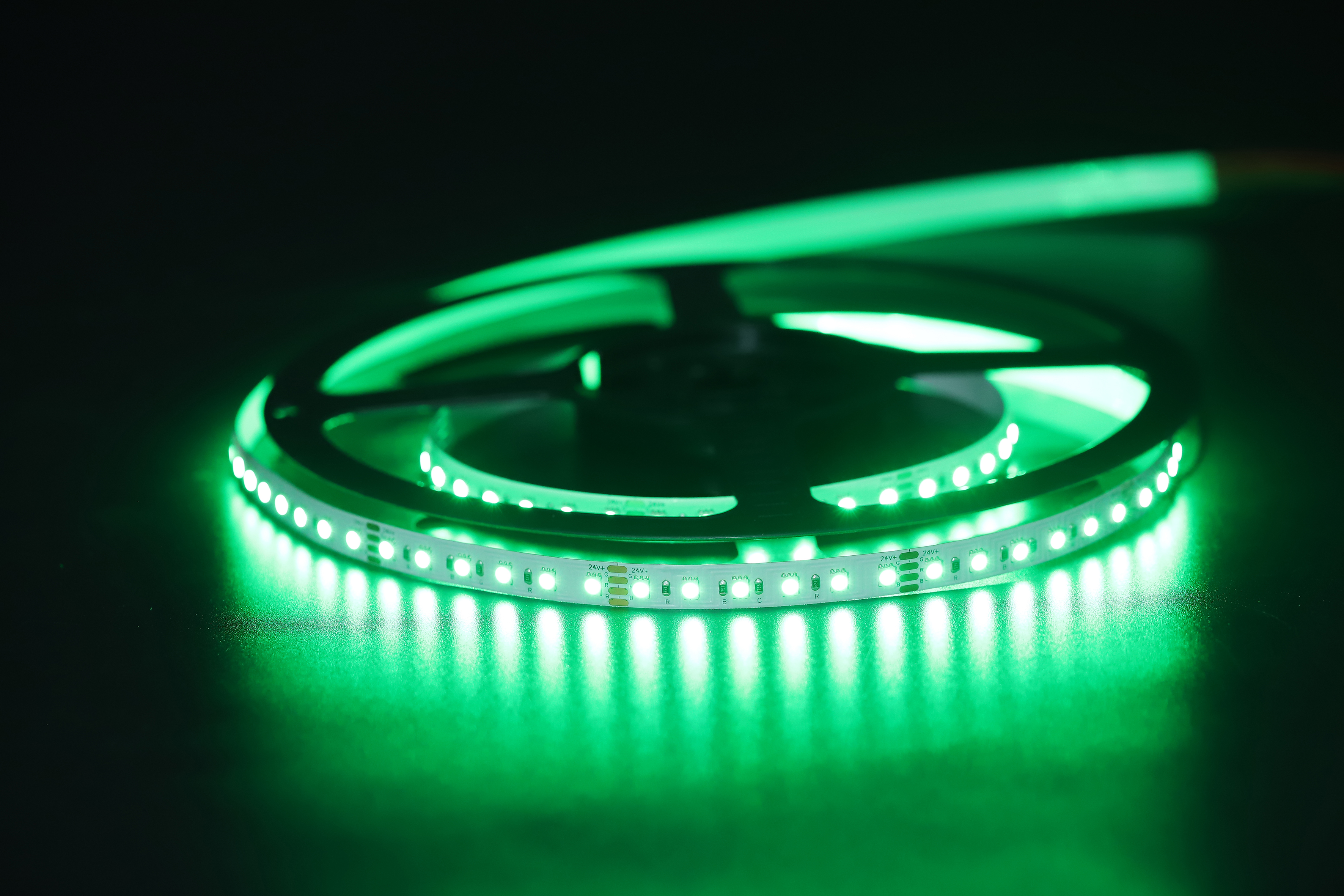
This is the criterion that cannot be resolved by data. In a ceiling designed to read as a single uninterrupted plane, a suspended fixture interrupts the geometry deliberately. In a hospitality dining room, that interruption may be the point — the pendant becomes the visual anchor of the table setting. In a retail or museum environment where the exhibits must dominate, a concealed linear solution keeps attention on the objects.
The practical test is simple: if the design intent is broken when the light source is visible, specify strip; if the design intent is broken when the fixture is invisible, specify a pendant luminaire.
4. Performance and environment: CRI, CCT, beam angle and IP
Performance data determines whether the chosen category can actually meet the project brief. On the ALPHALUCE strip references, the RGB LED strip delivers CRI > 80 with CCT options of 4000K and RGB, while the CSP IP68 LED strip (10W, CRI90, 320LED/m) reaches CRI > 90 with flux values of 960 / 990 / 980 / 990 lm and LED densities of 320 or 480 LEDs per metre. Both strip references share a 50 mm cut size, DC24 V operation and a 5 m maximum length per run.
On the pendant side, CRI ≥ 92 is consistent across the three references, with CCT options of 2700K, 3000K and 4000K — the warm range that hospitality, restaurant and residential briefs typically call for. Ingress protection, however, splits the categories clearly: the pendant references are rated IP20 for indoor dry locations, while the strip range extends to IP66 optional on the RGB model and IP68 optional on the CSP model, which is intended for sauna, spa, swimming pool, wellness-centre and other high-temperature or wet environments.
Step-by-Step: How to Choose Between the Two
Step 1 — Define the lighting task
Establish whether the requirement is ambient lighting, task lighting, accent lighting, or safety and wayfinding lighting. A single space often needs two of these, which is why many projects end up specifying both categories rather than choosing one.
Step 2 — Decide whether the source should be visible
Answer this before looking at any product data. It eliminates one category immediately in most schemes and prevents the most common specification error — selecting a fixture because it looks appropriate rather than because it performs the required task.
Step 3 — Map the geometry
For strip, measure the linear runs, confirm that a channel or concealed cavity exists, and plan the installation in 50 mm cut increments with a maximum of 5 m per run. For a pendant luminaire, confirm the suspension point, the required drop height, the viewing angles from which the fixture will be seen, and the structural capacity at the ceiling.
Step 4 — Plan the electrical and control layer
DC24 V strip requires a driver per run, which means driver location, access for maintenance and cable routing are all part of the design. AC230 V pendant luminaires such as the linear pendant lighting ALPH0070 need a different feed arrangement. Control protocol should be decided at the same stage: project briefs frequently call for DALI, triac dimming or tunable white, depending on the application.
Step 5 — Set measurable performance targets
Fix the CRI, CCT, flux and, where relevant, beam angle targets before comparing any products. In a dining environment, for example, briefs commonly specify high colour rendering for food, warm colour temperatures in the 2700K–3000K range, glare-free output and dimming capability. A pendant luminaire with selectable beam angles can address all four; a concealed strip addresses the ambient layer instead.
Step 6 — Confirm compliance and environmental limits
Check the regulatory layer early. In the EU, recessed luminaires must comply with safety standard EN IEC 60598-2-2. In the UK, BS 7671 requires IP44 in bathroom Zone 2 and IP65 in Zone 1 above a bath or shower. These are not optional preferences — they decide whether a category can be used in a given location at all. Manufacturer-level certification also belongs in this step: ALPHALUCE products are certified to CE, ETL, RoHS, LVD and EMC standards and are backed by ISO-certified quality and environmental management systems.
Step 7 — Validate with a sample before bulk order
Sample validation is where the two categories are compared on real performance rather than on paper. Order a strip sample together with its driver and a short cut length, and a pendant sample in the intended beam angle and CCT. Confirm CRI, colour temperature consistency, glare behaviour in the actual room, and that the cut lengths and run lengths match the site measurements.
Use Cases: Where Each Category Wins
| Application | LED strip role | Pendant luminaire role | Brief requirements to check |
|---|---|---|---|
| Hotel & hospitality interiors | Cove lighting, wall grazing, niche and corridor lines | Feature fixture over lounge seating and reception areas | Anti-glare design, CRI ≥ 92, warm CCT 2700K–3000K, DALI/KNX dimming; IP65 for outdoor zones |
| Restaurants & dining | Back-bar, banquette and architectural accent lines | Defined pool of light over each table | High CRI for food (commonly ≥ 90), warm CCT 2700K–3000K, glare-free, DALI/triac/tunable white |
| Retail display & showrooms | Shelf, case and display-back lighting | Accent over display tables and focal zones | High CRI (commonly ≥ 92), flexible beam angles, adjustable aiming, glare-free |
| Wellness, spa & pool areas | IP-rated strip (IP66 optional / IP68 optional in the ALPHALUCE range) | Generally not suitable — pendant references are IP20 | Wet and high-temperature environment operation, IP rating, material durability |
| Office & commercial | Indirect lines and architectural detail | Linear pendant over meeting and collaborative tables | High CRI (commonly ≥ 90), glare control UGR < 19, energy efficiency, DALI/KNX |
| Residential & villa | Cove, niche and under-cabinet lines | Statement fixture over dining table or kitchen counter | High CRI, warm CCT, low glare, minimalist design, smart dimming / tunable white |
| Museum & gallery | Diffuse architectural background light | Only where the fixture can meet beam-control and UV requirements | Glare-free, precise beam control, no UV/IR — verify the exact product's CRI rather than assuming it |
LED Strip vs. Pendant Luminaire: Verified Comparison Table
The table below compares the two categories using the published parameters of the ALPHALUCE references named in this guide. Values are product specifications, not performance claims for every application.
| Consideration | LED strip | Pendant luminaire |
|---|---|---|
| Reference products | RGB LED strip — Digital chasing LED strip 120LED/m 24V IP20; LED strip lights — CSP IP68 LED STRIP 10W CRI90 320LED/m | Pendant luminaire ALPH0081; Pendant Lights ALPH0067; linear pendant lighting ALPH0070 |
| Mounting | Flexible linear, cut to length, concealed in channel, cove or cavity | Fixed self-contained assembly |
| Light distribution | Continuous linear output; beam angle not applicable | Defined distribution; beam angles 15°/24°/36°/60° on ALPH0067 |
| Rated power | 9.6 W / 14.4 W (both strip references) | 8 W (ALPH0067); 11 W (ALPH0081); 37 W (ALPH0070) |
| Luminous flux | 960 / 125 / 355 / 80 / 525 lm (RGB strip); 960 / 990 / 980 / 990 lm (CSP strip) | 630 lm; 720 lm; 2800 lm |
| Colour rendering | CRI > 80 (RGB strip); CRI > 90 (CSP strip) | CRI ≥ 92 (all three references) |
| Colour temperature | 4000K / RGB | 2700K / 3000K / 4000K |
| Operating voltage | DC24 V | AC230 V (ALPH0070) |
| Ingress protection | IP20 / IP66 optional (RGB strip); IP68 optional (CSP strip) | IP20 |
| LED density | 120 LEDs/m (RGB strip); 320 or 480 LEDs/m (CSP strip) | Not applicable |
| Cut size and run length | 50 mm cut size; maximum 5 m per run | Not applicable |
| Intended industries | Residential, hospitality, commercial, retail display, architectural, landscape; sauna, spa, swimming pools, wellness centres for the IP68 model | Residential, hospitality, commercial, retail display, office |
| Main planning risk | Driver location, run splitting at 5 m, channel depth, cut-length planning | Suspension point and alignment, glare in the sightline, ceiling feed and finish |
Frequently Asked Questions
Do LED strip and pendant luminaires have the same certification and IP requirements in the EU and UK?
No. The requirements differ by product type and by location. In the EU, recessed luminaires must comply with safety standard EN IEC 60598-2-2. Ingress protection is set by the installation zone: under UK BS 7671, bathroom Zone 2 requires IP44 and Zone 1, above a bath or shower, requires IP65. In the ALPHALUCE range, the strip references offer IP20 with IP66 optional (RGB strip) or IP68 optional (CSP strip), while the pendant references are rated IP20 for indoor dry locations. In wet zones, an IP-rated strip can therefore be a valid specification where a standard IP20 pendant luminaire is not.
Can a single architectural lighting manufacturer supply both LED strip and pendant luminaires?
Yes, and doing so simplifies the project. ALPHALUCE is an Italian architectural lighting brand founded in 2010 and headquartered in Florence, operating as an integrated design, R&D, manufacturing and sales company with approximately 150 staff and a 40,000 m² factory. Its portfolio spans recessed downlights, track lighting systems, wall washers, outdoor landscape fixtures, linear lighting, LED strip and pendant luminaires. Sourcing both categories from one manufacturer keeps colour temperature consistent across 2700K, 3000K and 4000K options, aligns dimming and control across the scheme, and reduces the number of interfaces a specifier has to manage.
What drives the cost difference between a LED strip system and a pendant luminaire?
The cost drivers are different in kind rather than simply different in level. For strip, the variables are LED density (120 LEDs/m versus 320 or 480 LEDs/m), colour rendering (CRI > 80 versus CRI > 90), ingress protection (IP20 versus IP66 or IP68 optional), the driver, and the channel or extrusion plus the labour to install, diffuse and wire it. For a pendant luminaire, the variables are the housing and finish, the suspension and fixing hardware, and the optical control — for example selectable beam angles of 15°, 24°, 36° and 60° on Pendant Lights ALPH0067. Because strip is priced per metre and pendant per fixture, the two should never be compared on unit price alone; compare the installed cost of achieving the same lighting effect.
How should a specifier validate LED strip and pendant luminaires before placing a full order?
Validate on samples, not on data sheets. For strip, request a sample together with its DC24 V driver, confirm the 50 mm cut size and the 5 m maximum run length against the actual site measurements, and check CRI, colour consistency and diffusion in the real channel. For a pendant luminaire, request the intended beam angle and CCT, then check the pool of light and glare behaviour from the seating positions where people will actually look at the fixture. Confirm CRI and CCT across the whole sample set before committing to production.
What lead-time factors should be planned when ordering strip and pendant luminaires for the same project?
Plan the four items that most often delay a mixed order: driver and control matching, since strip runs at DC24 V while pendant luminaires such as the linear pendant lighting ALPH0070 operate at AC230 V; finish and colour temperature options, which need to be locked before production; run lengths, because a 5 m maximum per run means long linear features must be split into multiple feeds; and the point at which the strip and pendant units are commissioned together on one dimming protocol. ALPHALUCE states a durability rating of L90B10 > 50,000 hours, validated across multiple use cases in China, APAC and Oceania, which is the kind of figure worth confirming at sample stage rather than at delivery.
Conclusion: Decide by Task, Then by Product
The LED strip versus pendant luminaire question resolves quickly once it is reframed. Strip is the answer when the light must be continuous, concealed and integrated into the architecture; a pendant luminaire is the answer when the fixture is a designed object and the space needs a controlled pool of light in a specific place. Light distribution, installation complexity, visual impact and compliance requirements each point to one category or the other, and the compliance layer is the only one that can eliminate an option outright.
Before finalising a selection, answer five questions: What lighting task does the space need? Should the source be visible? Does the geometry support linear runs, or a suspension point? What CRI, CCT, beam angle and IP rating does the location require? And has the choice been validated on a physical sample?
Next Step
ALPHALUCE Architectural Lighting Co. is an Italian architectural lighting brand founded in 2010 in Florence, delivering one-stop integrated lighting solutions for hospitality, residential, commercial, retail and landscape projects, with products certified to CE, ETL, RoHS, LVD and EMC standards and backed by ISO-certified quality and environmental management systems. Over 300 clients across more than 100 countries work with the company.
If you are comparing LED strip and pendant luminaire options for an upcoming project, you can request samples of both categories, ask for a quotation for your specification, or download the product catalogue to review the full range:
- Product catalogue (PDF): Download the ALPHALUCE brochure
- Website: www.alphaluce.com
- Email: info@alphaluce.com | Tel / WhatsApp: +86 135 5671 7282
Have Questions or Need More Details?
Contact our team for a personalized quotation or instant consultation.
Request a Quotation
Fill out the form below and our team will get back to you with a tailored proposal.
WhatsApp Direct Chat
Prefer to chat in real-time? Message us on WhatsApp for instant assistance & quick answers.
- Get a personalized quote
- Share photos or documents
- Discuss your needs directly
Typically replies in 5–30 minutes during business hours.