
Compliance Guide for Architectural Lighting: Certification, Standards, and Regional Product Fit
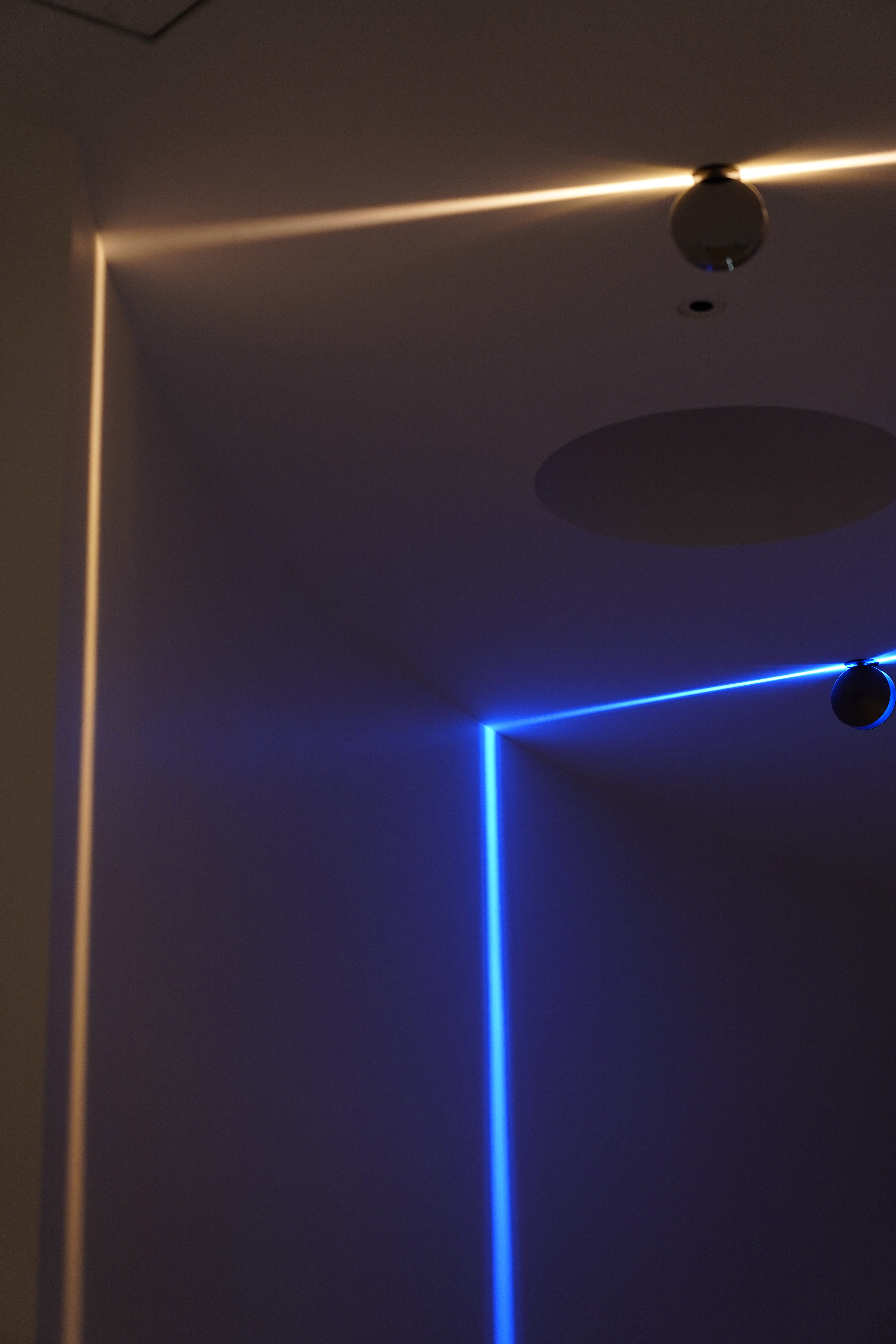
A luminaire that clears design review in one country can fail an electrical inspection in another. The difference is rarely the output, the beam angle or the finish. It is the certification route the destination market requires, the ingress protection (IP) rating the installation zone demands, and the voltage and driver architecture the site can legally support.
This guide is written for importers, distributors, specifiers and procurement teams at the research stage of an architectural lighting order. It shows how to match product families such as inground pool LED lights, waterproof downlights, low voltage step lights, bathroom sconces and track lighting systems to regional certification, standard and installation requirements before an order is placed. It also lists the documentation to request during compliance review, and explains why no single approval covers every market.
Quick answer: before ordering architectural lighting for any market, verify four items in this order.
- Certification route required by the destination market — for example CE for the EU, and a recognised safety listing such as ETL where a North American mark is required.
- IP rating required by the installation zone — for example IP65 in a UK bathroom Zone 1 above a bath or shower under BS 7671.
- Voltage and driver architecture — mains AC230V, low voltage DC24V, or DC48V track.
- The documentation pack that proves items 1 to 3 before shipment.
What Regional Compliance Actually Covers
In architectural lighting, compliance is not one document. It is three separate checks, and a project can pass one while failing another.
- Product safety certification. The fixture must be certified against the standard route the destination market recognises. Recessed luminaires sold in the EU market must comply with EN IEC 60598-2-2, per the International Electrotechnical Commission.
- Zone and waterproofing suitability. The IP rating has to match where the fixture is installed, not where it is catalogued. UK bathroom regulations under BS 7671 require IP44 for Zone 2 and IP65 for Zone 1 above a bath or shower, per the Institution of Engineering and Technology.
- Electrical and installation architecture. Mains AC230V, low voltage DC24V and DC48V track systems are not interchangeable. The driver, the dimming protocol and the wiring plan all change with the product family.
These checks usually surface at the wrong moment. Design teams select fixtures for output, beam angle and appearance. Compliance is reviewed later, after the purchase order is released, the cutout dimensions are already set in the ceiling drawings, and the electrical contractor has planned the circuits. Three failure patterns follow.
Certification mismatch. A supplier holds a certification set, but the buyer assumes that set covers the project market. ALPHALUCE products are certified to CE, ETL, RoHS, LVD and EMC standards, backed by ISO-certified quality and environmental management systems. Those marks are the starting point for a compliance review, not a substitute for one: the buyer still has to confirm which mark the destination market requires and that the specific model carries it.
Zone mismatch. An IP20 trimless downlight specified into a shower zone cannot be corrected with a gasket. The correct action is to re-specify to a wet-area model, which changes the cutout and the ceiling detail.
Voltage mismatch. A DC24V pool or step light circuit planned onto mains wiring requires a driver that no one has allocated a location for, and DC48V track requires control gear that matches the selected dimming protocol.
The commercial consequence is the same in all three cases: rejected or held shipments, re-specification, failed inspection, delayed handover and disputed warranty responsibility. None of these are lighting performance problems, which is why output data alone never answers the compliance question.
Industry Background: A Growing Market With Diverging Rules
The architectural lighting market was valued at USD 11.1 billion in 2025 and is projected to reach USD 17.5 billion by 2033, according to Grand View Research. The same source reports that Asia Pacific dominated with a 43.2% revenue share in 2025, with China as the largest country market, and that the commercial segment accounted for 50.9% of market share in 2025.
Market size estimates vary by report scope and baseline year. Grand View Research puts the 2025 figure at USD 11.1 billion; Fortune Business Insights reports USD 8.52 billion for 2024, and Strategic Market Research reports USD 8.3 billion for 2024. Any single figure should be treated as directional, not precise.
One adjacent trend is more relevant to compliance than market size. Human-centric lighting reached USD 3.53 billion in 2024, according to Fortune Business Insights, reflecting a move toward wellness-oriented design. Projects in this direction typically raise requirements that are easy to forget at the specification stage: higher colour rendering, glare control, flicker-free operation and dimming compatibility.
The registry of global competitors is well documented — Acuity Brands, Signify (Philips), Zumtobel Group and ERCO are widely listed as major players by Fortune Business Insights and SNS Insider. What matters for a buyer is that a supplier exporting into Europe, the Middle East, North America and Australia must carry multiple certification routes at the same time, and must be able to prove which model carries which route. That is now a differentiator in supplier selection, not a formality.
Product Family by Product Family: Where the Compliance Check Changes the Selection
Compliance is decided at the product family level, not at the brand level. ALPHALUCE is an Italian architectural lighting brand founded in Florence in 2010, operating a 40,000 m2 factory with approximately 150 staff and a 20-engineer R&D team. The checks below apply to any supplier, and the reference models show how published specifications read when the compliance parameters are stated explicitly.
Inground and pool LED lights: waterproofing and submersion checks
Ground and pool fixtures carry the highest waterproofing risk in a project, because they are installed where water collects, where irrigation runs, and where cleaning equipment passes. IP class is the first checkpoint, and IP65 and IP67 are not interchangeable in a pool surround.
- ALDL1334 inground pool LED light — 1W/2W, 90lm, CRI ≥92, IP67, beam angle 15 degrees / 24 degrees / 36 degrees / 60 degrees, cutout 21 mm, DC24V, CCT 2700K / 3000K / 4000K.
- ALDL0192 exterior ground lighting — 1W/2W, 60/130lm, CRI ≥92, IP67, beam angle 24 degrees / 36 degrees, cutout 34 mm, DC24V, CCT 2700K / 3000K / 4000K.
- ALDL1677 inground light — 5W, 126lm, CRI ≥92, IP65, beam angle 15 degrees / 24 degrees / 36 degrees / 60 degrees, 15-degree adjustable, stainless steel or brush anodised finish, CCT 2700K / 3000K / 4000K.
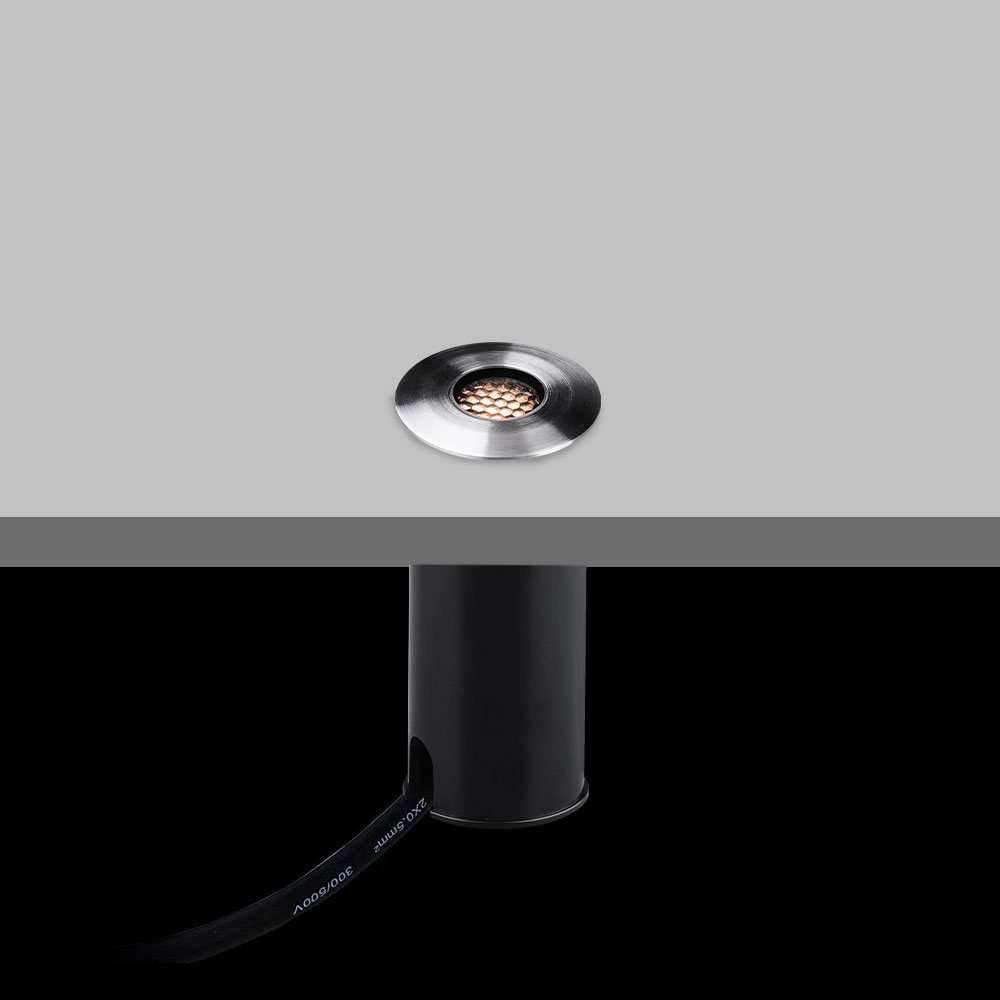
Three checks decide the model. First, does the fixture see standing water or only rain and washdown — IP67 for the first case, IP65 for the second. Second, where will the DC24V driver live, and is that location accessible and protected. Third, does the cutout diameter match the paving or decking detail. On a real project the cutout is the hardest item to change later, and the installation drawing is the document that resolves it.
Waterproof downlights and bathroom fixtures: zone-based IP selection
Bathroom and wet-area lighting is the clearest example of why a single product family cannot be approved for every position in a room. Under BS 7671 in the UK, Zone 2 requires IP44 and Zone 1 above a bath or shower requires IP65. A fixture that is correct 900 mm away from the shower can be non-compliant directly above it.
- ALDL1238 bathroom recessed light — 10W, 960lm, CRI ≥92, IP65, beam angle 15 degrees / 24 degrees / 36 degrees / 55 degrees, cutout 75 mm minimum, CCT 2700K / 3000K / 4000K. Intended for bathroom, wet area, landscape, commercial, residential and hospitality applications.
- ALDL1232 waterproof downlight — 7W, 508lm, CRI ≥92, IP65, beam angle 15 degrees / 24 degrees / 36 degrees / 55 degrees, cutout 60 mm, trimless design, fixed mounting.
- ALDL1191 bathroom spotlight — 7W / 10W, 580lm / 717lm, CRI ≥92, IP54, beam angle 15 degrees / 24 degrees / 36 degrees / 50 degrees, cutout 83 mm, narrow trim, adjustable 0-25 degrees tilt and 350 degrees rotation.
- ALDL1188 waterproof spotlight — 13W, 1231lm, CRI ≥92, IP54, cutout 90 mm, trimless design, adjustable 0-25 degrees tilt and 350 degrees rotation.
- ALWL0098 bathroom sconce — 8W, 340lm, CRI ≥92, IP65, DC24V, fixed wall light, CCT 2700K / 3000K / 4000K.
This is where a catalogue can mislead. The IP54 models above are legitimate wet-area products, but IP54 sits below the IP65 Zone 1 requirement. Placing ALDL1191 or ALDL1188 in Zone 1 and ALDL1238 or ALDL1232 in Zone 2 is a simple, documented decision — and it is the one that most often gets reversed by a building inspector.
Low voltage step lights: voltage architecture and driver placement
Step lighting is where voltage architecture, not certification, usually decides the outcome. Most step fixtures in an outdoor run are DC24V, which means a driver, a protected junction arrangement and a voltage-drop check over the length of the run.
- ALDL1540 low voltage step light — 3W, 75lm, CRI ≥90, IP67, cutout 49 mm, DC24V, CCT 2700K.
- ALDL1538 recessed stair light — 3W, 160lm, CRI ≥85, IP67, cutout 49 mm, DC24V, CCT 2700K / 3000K / 4000K.
- ALDL1956 stair light and ALDL2009 step light — 3W, 270lm, CRI ≥92, IP65, cutout 94 x 35 mm, DC24V, CCT 2700K / 3000K / 4000K.
- ALDL1146 interior step light — 1W / 2W, 15 / 30lm, CRI ≥90, IP20, cutout 80 x 32 mm. Interior dry areas only.
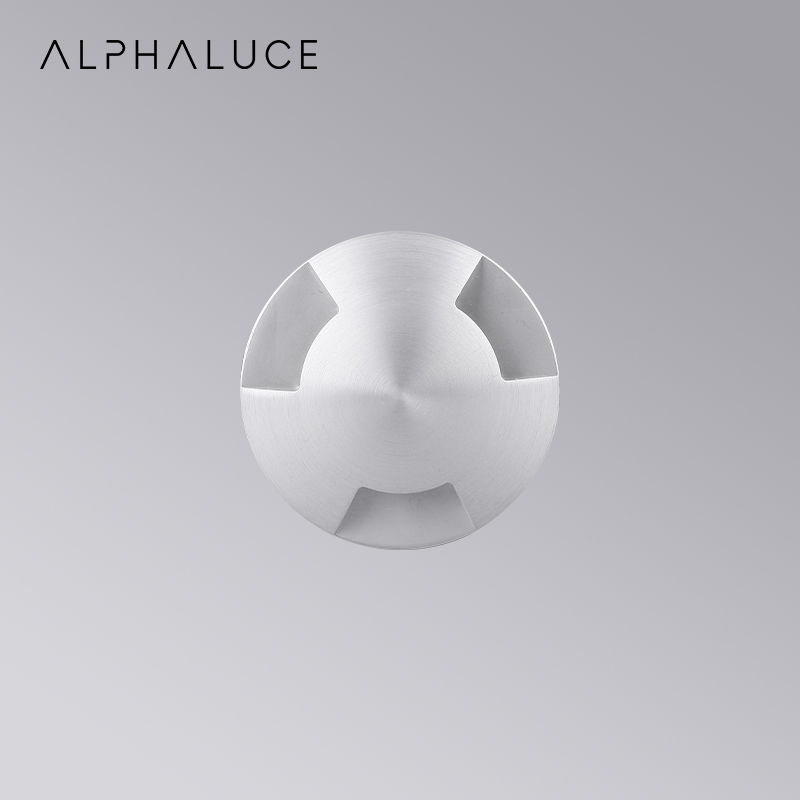
Two questions should be answered in writing before ordering. Where is the driver installed, and is that location accessible for maintenance. How long is the low voltage run, and has the voltage drop been calculated so that the end of the circuit still meets the specified output. A specification that lists luminaires only, without the driver and the run length, is incomplete regardless of how detailed the fixture parameters are.
Track lighting systems: indoor IP ratings, voltage and dimming protocol
Track lighting systems are architectural workhorses in retail, museum, showroom and hospitality interiors, and they are almost always IP20. That single figure rules them out of exterior or wet zones, no matter how well the rest of the specification reads.
- ALTR0247 commercial track lighting — 8W, 680lm, CRI ≥92, IP20, beam angle range 15-60 degrees, adjustable 0-90 degrees tilt and 350 degrees rotation, CCT 2700K / 3000K / 4000K.
- ALTR0253 track spotlight — 7W, 560lm, CRI ≥97, IP20, DC48V, 5 mm adaptor, beam angle 15 degrees / 24 degrees / 36 degrees / 55 degrees, adjustable 0-90 degrees tilt and 355 degrees rotation.
- ALTR0206 magnetic track light — 15W, 1180lm, CRI ≥90, IP20, DC48V, beam angle 24 degrees / 36 degrees, adjustable up to 90 degrees.
- ALTR0276 dimmable track lighting — 7W, 560lm, CRI ≥97, IP20, DC48V, beam angle 15 degrees / 24 degrees / 36 degrees / 55 degrees.
- ALTR0207 wall wash track lighting — 15W, 1180lm, CRI ≥90, IP20, DC48V, fixed.
- ALTR0212 suspended track lighting — 8W, 587lm, CRI ≥92, IP20, DC48V, beam angle 15 degrees / 24 degrees / 36 degrees / 50 degrees, fixed.
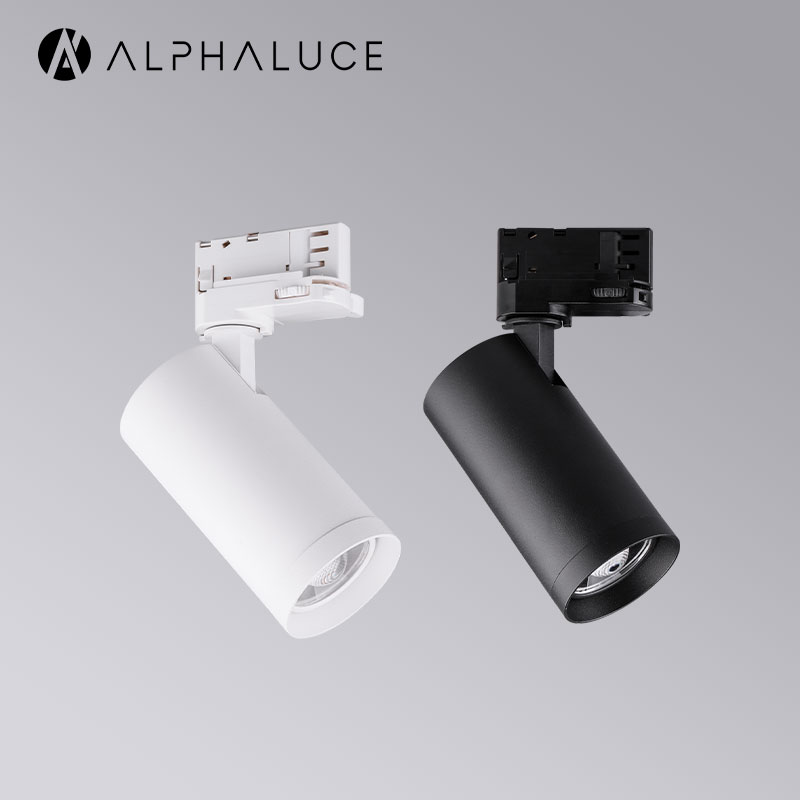
For track, the compliance question is a compatibility chain: does the track voltage match the fixture (DC48V in the models above), does the dimming protocol match the control system, and does the adaptor geometry match the track profile. A 5 mm adaptor specification is a compatibility statement, not a formality.
Outdoor landscape lighting: corrosion, UV and IP classes
Garden, path and facade lighting sits in the same enclosure class as many other outdoor fixtures but faces a different durability profile. Landscape specifiers typically require IP67, corrosion resistance, UV protection and CRI of at least 90, and the coastline or irrigation environment often decides whether IP65 is sufficient.
- ALSL0152 garden bollard light — 7W, 422lm, CRI ≥90, IP65, DC24V, fixed, heights 400 / 800 / 1200 mm, CCT 2700K / 3000K / 4000K, custom colour available.
- ALSL0165 bollard light outdoor — 7W, 560lm, CRI ≥90, IP65, DC24V, adjustable 0-135 degrees tilt and 355 degrees rotation, height 400 mm.
- ALSL0029 garden spike light — 3W, 240lm, CRI ≥97, IP65, DC24V, beam angle 24 degrees / 36 degrees, adjustable 0-355 degrees tilt and 360 degrees rotation.
- ALSL0086 spike light — 7W, 560lm, CRI ≥97, IP65, DC24V, beam angle 12 degrees / 24 degrees / 38 degrees / 50 degrees, adjustable 0-45 degrees tilt.
- ALSL0024 garden spotlight — 3W, 240lm, CRI ≥97, IP65, DC24V, adjustable 0-110 degrees tilt.
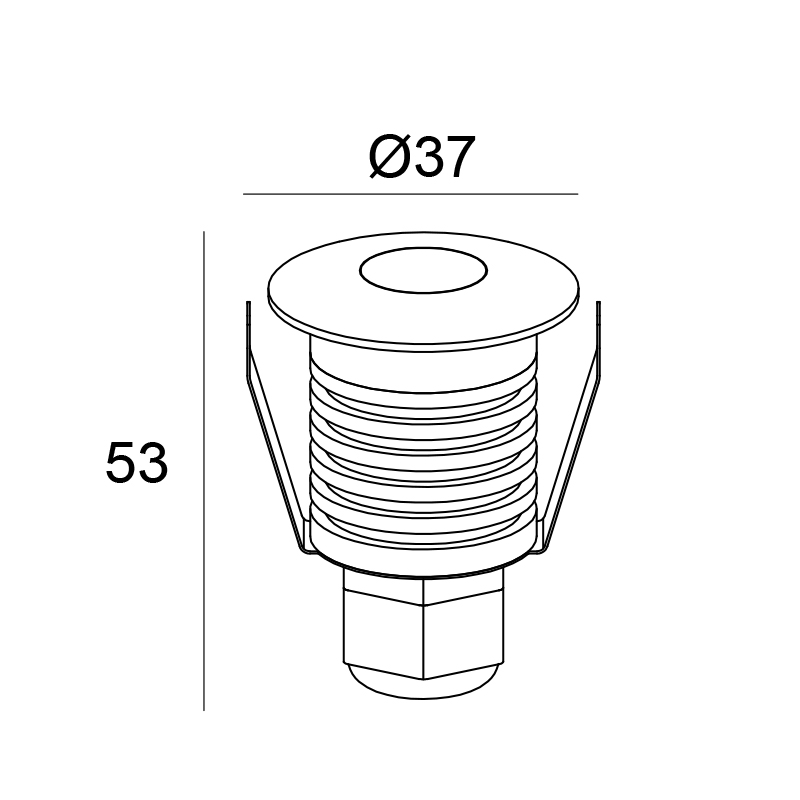
For linear exterior applications, the CSP IP68 LED strip offers 9.6W / 14.4W, 960 to 990 lm, CRI above 90, DC24V, cut lengths of 50 mm and a maximum of 5 m per strip, with IP68 optional. It is intended for sauna, spa, swimming pool, hospitality, residential, commercial, wellness centre and high-temperature or wet environments. Where a project needs IP68 rather than IP65, that has to be specified at order stage, because a rating option is not a field upgrade.
Indoor architectural luminaires: certification applies even at IP20
A common misreading is that IP20 products sit outside the compliance discussion because they never touch water. IP rating and safety certification are separate requirements, and an IP20 recessed downlight or pendant still has to be certified for the market it is sold into.
- ALDL1851 recessed downlight — 7W, 630lm, CRI ≥97, IP20, cutout 55 mm, beam angle 15 degrees / 24 degrees / 36 degrees / 55 degrees.
- ALDL1587 recessed adjustable downlight — 5W, 450lm, CRI ≥92, IP20, cutout 68-70 mm.
- ALDL1609 trimless downlight — 7W, 630lm, CRI ≥92, IP20, cutout 76-80 mm.
- ALDL1552 trim downlight — 5W, 450lm, CRI ≥97, IP20, cutout 35 mm.
- ALPH0067 pendant light — 8W, 630lm, CRI ≥92, IP20, beam angle 15 degrees / 24 degrees / 36 degrees / 60 degrees, fixed mounting.
- ALPH0081 pendant luminaire — 11W, 720lm, CRI ≥92, IP20, fixed mounting.
For these families the compliance conversation shifts to documented performance: colour rendering, glare control and dimming protocol. Office and commercial specifications commonly call for CRI of at least 90, glare control below UGR 19, flicker-free operation and a DALI or KNX dimming system. Museum and gallery projects typically move further, to CRI of at least 95, no UV or IR emission, glare-free output and precise beam control.
Step-by-Step: Matching a Product Family to a Project Before Ordering
The sequence below is the practical order of operations. Reversing steps 1 and 2 is the most common cause of a late re-specification.
- Define the destination market and the certification route. Establish which route the project market requires, and whether the supplier holds it for the specific model, not only as a company-level certificate set.
- Map every installation area to a zone and an IP class. Bathroom zones, pool surrounds, planted areas, exterior facades and interior dry areas all produce different minimum ratings. Treat each area as a separate line item.
- Confirm the voltage and driver architecture. Decide mains AC230V, low voltage DC24V, or DC48V track per area, then allocate driver and control gear locations. Confirm the dimming protocol.
- Match models within the selected family. Use cutout dimensions, beam angles, CCT options and CRI to narrow the family. Confirm that the model selected is the one that carries the required IP rating.
- Request the documentation pack. Ask for the certificate of conformity, the relevant test evidence, the IP rating evidence, the specification sheet, the driver and control gear data, and the installation instructions.
- Validate with a sample. Check cutout fit, finish, beam behaviour, CCT, and the construction detail that produces the IP rating.
- Lock the compliance checklist into the purchase order. Specify the certification route, IP class, voltage, driver, cutout, CCT and CRI as contractual line items, together with the labelling that must appear on the delivered goods.
Documentation Buyers Should Request for Compliance Review
A compliance review is only as good as the documents behind it. The table below lists the pack a buyer should request before releasing a purchase order. Requests should be model-specific, not company-level.
| Document | What it proves | Ask it for |
|---|---|---|
| Certificate of conformity | Which standards and directives the model is certified against | Each model in the order |
| Safety test report for the applicable standard | Independent evidence, for example EN IEC 60598-2-2 for recessed luminaires in the EU | Recessed and track families |
| IP rating test evidence | That IP65, IP67 or IP68 is a tested result, not a marketing label | Bathroom, inground, step and landscape models |
| Published specification sheet | Cutout dimensions, wattage, lumen output, CRI, CCT options and beam angles | All families, for ceiling and paving coordination |
| Driver and control gear data | Voltage architecture and dimming protocol compatibility | DC24V and DC48V systems |
| Installation instructions and wiring diagram | Correct mounting, sealing and driver placement | Any model with a sealing joint or remote driver |
| Labelling and marking artwork | That the delivered goods carry the certification marks required | Approval before production |
| Material compliance statement | Restricted substance compliance such as RoHS | EU-bound orders |
| Quality and environmental management certificates | The manufacturer operates certified quality and environmental systems | Supplier qualification stage |
| Durability and performance evidence | Basis of lifetime claims. A listed L90B10 rating above 50,000 hours is only useful when the validated use cases and markets are shown | Long-life specification projects |
| Pre-shipment inspection record | That the delivered batch matches the approved sample | Before shipment release |
ALPHALUCE publishes a downloadable catalogue covering its architectural lighting range, which is a useful starting point for building the model list that the compliance pack then has to cover.
Use Cases: Where the Compliance Check Changes the Specification
Different project types put weight on different compliance variables. The scenarios below are the ones where a change of market, zone or operating condition changes the product selection.
Hospitality and hotel projects. Hospitality lighting operates 24/7 and combines ambient and accent functions. Typical requirements are IP65 for outdoor use, warm CCT in the 2700K to 3000K range, anti-glare design, CRI of at least 92, and a DALI or KNX dimming system. That combination decides which bathroom, corridor, facade and landscape models can be used in the same specification.
Wet areas in hotels and residences. The UK bathroom zone rules make this a model-level decision rather than a family-level one. Within the same supplier range, IP65 models such as ALDL1238, ALDL1232 and ALWL0098 suit the highest-risk positions, while IP54 models such as ALDL1191 and ALDL1188 suit positions outside Zone 1.
Marine and cruise ship lighting. Marine specifications require IP67, marine-grade corrosion resistance to C5-M, vibration resistance and salt-fog resistance, with 24/7 continuous operation and marine-grade dimming plus emergency backup. The corrosion class, not the IP rating alone, is the deciding document.
Healthcare lighting. Hospital projects run 24/7 and require high CRI of at least 90, flicker-free performance, glare control below UGR 19, easy-clean construction and IP44 or higher for wet areas, supported by a DALI dimming system and emergency backup. Here the IP rating is a minimum entry condition, and flicker and glare evidence becomes the differentiator.
Museum and gallery lighting. CRI of at least 95, no UV or IR emission, glare-free output and precise beam control are standard requirements. Track-mounted solutions such as the ALTR0247 and ALTR0253 track spotlight are typical selections, with CRI of at least 97 available in the ALTR0253, ALDL1552 trim downlight and ALDL1851 recessed downlight.
Residential villas and gardens. Evening and night-time operation with smart dimming, CRI of at least 90, warm CCT and low glare are the usual residential requirements. Landscape sections of the same project commonly call for IP67, corrosion resistance, UV protection and CRI of at least 90, which is where the ALSL and inground families enter the specification alongside the DC24V wiring plan.
Showroom and retail display lighting. Showroom requirements centre on CRI of at least 92, flexible beam angles, adjustable aiming and glare-free output, usually with DALI dimming and a track system. This is the clearest case where the compliance decision is about control protocol and beam flexibility rather than waterproofing.
Comparison Table: Compliance Parameters by Product Family
The table below summarises the parameters that determine regional fit for each family, using published ALPHALUCE specifications. Voltage is listed only where it is stated in the published specification; unlisted values should be confirmed in writing before ordering.
| Product family | Reference models | IP rating | Operating voltage | Key compliance checkpoint |
|---|---|---|---|---|
| Inground and pool lights | ALDL1334, ALDL0192, ALDL1677 | IP67 (ALDL1334, ALDL0192), IP65 (ALDL1677) | DC24V (ALDL1334, ALDL0192) | Submersion versus washdown exposure; remote driver location; cutout 21 mm or 34 mm |
| Waterproof downlights | ALDL1232, ALDL1238 | IP65 | Confirm in writing | Zone 1 suitability; cutout 60 mm (ALDL1232) or 75 mm minimum (ALDL1238) |
| Bathroom spotlights and sconces | ALDL1191, ALDL1188, ALWL0098 | IP54 (ALDL1191, ALDL1188), IP65 (ALWL0098) | DC24V (ALWL0098) | IP44 Zone 2 versus IP65 Zone 1 under BS 7671; model-to-zone mapping |
| Low voltage step lights | ALDL1540, ALDL1538, ALDL1956, ALDL2009 | IP67 (ALDL1540, ALDL1538), IP65 (ALDL1956, ALDL2009) | DC24V | Driver accessibility; voltage drop over the run; cutout 49 mm or 94 x 35 mm |
| Interior step lights | ALDL1146 | IP20 | Confirm in writing | Indoor dry areas only; not a substitute for an IP65 or IP67 step light |
| Track lighting systems | ALTR0247, ALTR0253, ALTR0206, ALTR0276, ALTR0207, ALTR0212 | IP20 | DC48V (ALTR0253, ALTR0206, ALTR0276, ALTR0207, ALTR0212) | Indoor dry locations only; adaptor geometry; dimming protocol |
| Outdoor landscape lights | ALSL0152, ALSL0165, ALSL0024, ALSL0029, ALSL0086 | IP65 | DC24V | Corrosion and UV exposure; bollard height; spike or bollard mounting |
| Linear strip | CSP IP68 LED strip | IP68 optional | DC24V | Rating must be specified at order stage; cut every 50 mm; maximum 5 m per strip |
| Indoor recessed and pendant | ALDL1851, ALDL1587, ALDL1609, ALDL1552, ALPH0067, ALPH0081 | IP20 | Confirm in writing | Safety certification still applies; CRI, glare control and dimming protocol become the key parameters |
Frequently Asked Questions
Which certifications and standards apply to architectural lighting in the EU and UK?
Recessed luminaires sold in the EU market must comply with EN IEC 60598-2-2, according to the International Electrotechnical Commission. In the UK, BS 7671 sets bathroom zone requirements of IP44 for Zone 2 and IP65 for Zone 1 above a bath or shower, according to the Institution of Engineering and Technology. ALPHALUCE products are certified to CE, ETL, RoHS, LVD and EMC standards and are backed by ISO-certified quality and environmental management systems. The important qualification is that a company-level certification set does not replace a model-level check: the buyer should confirm that the specific model ordered carries the mark the destination market requires, because a mark accepted in one market is not automatically accepted in another.
Can one architectural lighting manufacturer support multi-region compliance requirements?
Yes, provided the supplier can show model-level certification rather than only company-level certificates. ALPHALUCE is an Italian architectural lighting brand founded in Florence in 2010. It operates a 40,000 m2 factory with approximately 150 staff, a 20-engineer R&D team, and an annual output of 504,000 units. It exports about 80% of production to Europe, the Middle East, North America and Australia, and has established long-term partnerships with more than 300 clients across over 100 countries and regions, supported by a vertically integrated chain that includes its own foundry, surface treatment facilities and assembly plants. Products are certified to CE, ETL, RoHS, LVD and EMC standards. That breadth reduces the risk of a mixed-region order, but it does not remove the buyer obligation to match each model to the destination market before ordering.
Does compliance review add cost to an architectural lighting order?
No published price exists for compliance documentation, and this guide does not estimate one. The practical cost exposure runs in the opposite direction. A fixture specified without a zone or certification check can be rejected at inspection, and the replacement has to be re-ordered and re-shipped while the project is held. The controllable step is to request the documentation pack before releasing the purchase order and to confirm four parameters against the project: IP class for the installation zone, voltage and driver architecture, cutout dimensions against the ceiling or paving detail, and the certification route for the destination market.
Can a buyer validate a fixture with a sample before placing a bulk order?
Sample validation is the most reliable way to confirm that a fixture matches both the documentation and the installation detail. It allows the buyer to verify cutout fit for models such as the ALDL1334 at 21 mm, the ALDL1238 at 75 mm minimum, the ALDL1540 at 49 mm or the ALDL1956 at 94 x 35 mm, along with finish, beam behaviour, CCT consistency and the construction detail that produces the stated IP rating. The sample request should carry the same checklist as the purchase order, so that the approved sample and the production batch can be compared directly. Sample and catalogue requests for ALPHALUCE architectural lighting can be submitted through the company website at alphaluce.com.
How does confirming compliance early protect the delivery schedule?
The main schedule risk is change after production or tooling has started. A late switch from an IP20 fixture to an IP65 model, or from mains wiring to a DC24V circuit, affects the product, the driver, the cutout and the labelling at the same time. ALPHALUCE operates a vertically integrated industrial chain that includes its own foundry, surface treatment facilities and advanced assembly plants, which supports control over quality, customisation and lead times. The buyer-side action is to confirm the destination market, IP class, voltage architecture and documentation expectations before the purchase order is released, and to include them as contractual line items.
Conclusion: Treat Compliance as a Specification Input
Compliance in architectural lighting is not a post-delivery formality. It is a set of four specification inputs — certification route, IP class, voltage and driver architecture, and documentation — that must be fixed before the purchase order is released. Get them right and the same product range travels well across Europe, the Middle East, North America and Australia. Get them wrong and the cost appears as a rejected shipment, a failed inspection or a re-specified ceiling detail.
The practical rule is to work family by family. Inground and pool lights live and die by IP67 and DC24V. Bathroom fixtures depend on the zone mapping between IP54, IP44 and IP65. Step lights depend on driver placement and voltage drop. Track lighting systems are indoor IP20 products and depend on adaptor and dimming compatibility. Landscape fixtures depend on corrosion and UV exposure as much as on the IP number. Indoor recessed and pendant luminaires still need certification even though water is never part of the discussion.
ALPHALUCE is an Italian architectural lighting brand founded in Florence in 2010, with 40 years of lighting design heritage and 15 years of dedicated R&D and manufacturing experience behind its recessed downlights, track lighting systems, step lights, wall washers, outdoor landscape fixtures and linear lighting. Products are certified to CE, ETL, RoHS, LVD and EMC standards, with low-glare optics below UGR 19, DALI and Bluetooth control options and CRI of at least 92 or 97 depending on the model. For buyers building a compliance pack, the catalogue is the starting document and the model-level certificates are the finish line.
Next step: build your compliance pack before you order.
Download the ALPHALUCE catalogue to start your model list: ALPHALUCE architectural lighting catalogue (PDF)
Request a sample, a quotation, or model-level certification documents: www.alphaluce.com
Email: info@alphaluce.com | Tel / WhatsApp: +86 135 5671 7282 | Address: Dongguan, Guangdong, China
Have Questions or Need More Details?
Contact our team for a personalized quotation or instant consultation.
Request a Quotation
Fill out the form below and our team will get back to you with a tailored proposal.
WhatsApp Direct Chat
Prefer to chat in real-time? Message us on WhatsApp for instant assistance & quick answers.
- Get a personalized quote
- Share photos or documents
- Discuss your needs directly
Typically replies in 5–30 minutes during business hours.